Entering the stock market for the first time can feel overwhelming when staring at complex trading screens. Choosing between a market order vs. limit order often decides whether your trade executes smoothly or incurs unexpected costs. Data from the World Federation of Exchanges reveals that retail trading volume accounts for over twenty percent of global equity transactions daily. When share prices fluctuate rapidly, sending the right order type protects your hard-earned capital from sudden price shifts.
Understanding how trade execution mechanisms operate empowers you to navigate market volatility with complete confidence. It helps you manage portfolio risk while executing buys and sells at precise target prices.
In this comprehensive trading guide, we explain market order meaning, explore limit order meaning, compare market order vs limit order differences, analyze various types of stock orders, and share practical market order examples.
Comparing a market order vs. limit order comes down to balancing execution speed against price control.
A market order instructs your broker to buy or sell a stock immediately at the best currently available market price. Conversely, a limit order instructs your broker to execute a trade only if the stock reaches a specific price or better.
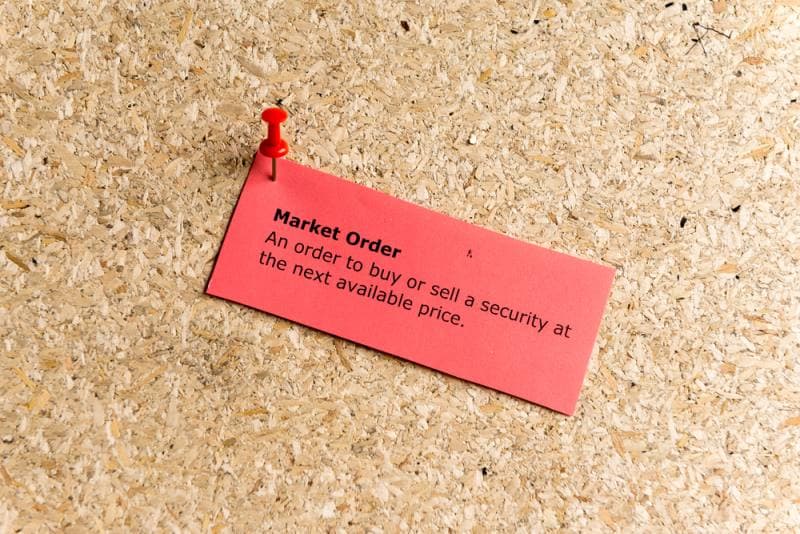
Understanding market order meaning requires examining how orders fill inside financial exchanges.
Asking how does a market order execute in the stock market reveals a simple two-step process. When you submit a market order, the exchange matches your request instantly with existing bids or asks on the order book.
Reviewing real-world market order examples clarifies how execution speed functions. If Apple stock trades at $180 per share, submitting a market order buys shares immediately at $180 or the closest available price quote.
Must Try: Mastering Market & Limit Orders: Enjoying Profitable Trading
Inquiring about limit order meaning highlights how investors protect their portfolios against unexpected price swings.
Asking how does a limit order work when buying or selling stocks centers on price caps. When placing a buy limit order at $175, your broker buys shares only if the market price drops to $175 or lower. For a sell limit order set at $185, execution occurs only when buyers pay $185 or higher.
Evaluating market order vs limit order differences helps traders choose the appropriate execution strategy for every market environment.
| Trading Metric | Market Order Mechanics | Limit Order Mechanics |
| Execution Priority | Immediate speed of fill | Strict price guarantee |
| Price Control | Subject to market slippage | Exact target price or better |
| Fill Certainty | Guaranteed execution in liquid markets | No guarantee of order fill |
| Ideal Market State | High liquidity and low volatility | High volatility or illiquid stocks |
Analyzing these operational variations ensures you match your order type with current market conditions.
Understanding when should investors use a market order instead of a limit order depends on your primary trading priority.
Use a market order when buying or selling highly liquid, large-cap stocks where immediate execution matters more than micro-cent price fluctuations.
Asking is a market order or limit order better for beginner investors highlights safety strategies for new market participants.
Beginners benefit from using limit orders because price boundaries prevent buying overvalued shares during sudden price spikes. Using limit orders teaches discipline while safeguarding trading accounts against market volatility.
Exploring diverse types of stock orders allows traders to automate advanced risk management strategies across volatile markets.
Essential Reads: How and Why Should You Invest in Blue Chip Stocks?
Navigating equity markets successfully requires choosing trade execution mechanisms that align with your financial strategy. Throughout this investment guide, we detailed market order meaning, explored limit order mechanics, compared execution speed against price boundaries, and provided real-world trading examples. We also analyzed different types of stock orders, discussed when to prioritize execution speed over price, and highlighted safe trading techniques for beginner investors.
Selecting the appropriate order strategy protects your portfolio against unexpected price slippage while ensuring seamless trade execution. Developing disciplined order placement habits gives you control over your long-term investment growth.
To explore real-time equity quotes, track market trends, and access expert stock analysis, visit our financial portal today to enhance your investment strategy.
Partial fills occur when a limit order executes for only a portion of your total requested shares because insufficient market liquidity exists at your target price. The remaining unfulfilled shares stay pending on the exchange order book until matching shares become available or your order duration expires at trading close.
Slippage refers to the price difference between when you place a market order and when your broker actually fills it. During periods of extreme market volatility or sudden news releases, prices shift in milliseconds, causing your filled market order price to differ significantly from your initial quote.
Pending limit orders remain active based on the time-in-force duration you select during order entry. Day orders automatically expire at the close of the current trading session if unfilled. Good til canceled orders remain active for up to sixty days until executed, canceled, or expired.
Most modern online brokers do not charge higher commission fees for limit orders, offering commission-free trading for both market and limit orders on major stock exchanges. However, investors should check individual brokerage fee schedules for potential regulatory transaction fees or specialized routing costs on extended-hours trades.
Yes, investors can place orders during pre-market and after-hours trading sessions using specialized limit orders. Market orders are prohibited during extended hours due to low liquidity and wide bid-ask spreads, making limit orders mandatory to protect traders from extreme price swings outside normal market hours.