A few years back, buying Bitcoin meant wrestling with an exchange login and a string of random words you had to guard with your life. Now your brokerage app will sell you a slice in seconds. So which way should you go? Here’s how Bitcoin ETFs vs. buying Bitcoin really play out for fees, taxes, and safety.
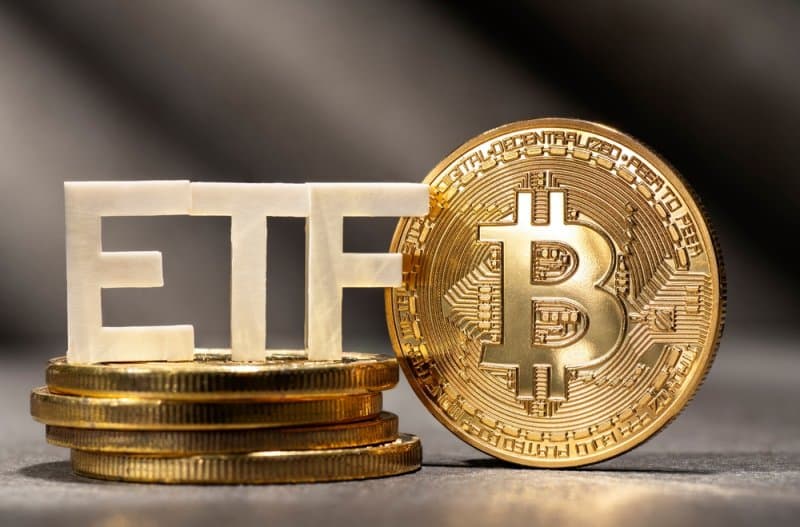
A Bitcoin ETF is basically a basket with one thing inside it, Bitcoin. The fund buys and stores the coins, then sells shares of itself on a stock exchange. You pick those shares up in your usual brokerage account, the same way you’d buy Apple stock. US spot funds first appeared in January 2024, and they trade only during market hours.

This route cuts out the fund entirely. You open an account on a crypto exchange, pay for some Bitcoin, and it’s yours. Leave it on the exchange or move it into a wallet you control. If the tech still feels fuzzy, it helps to see how blockchain and cryptocurrency differ, because plenty of people treat them as one thing.
Price-wise, they move together. Everything else is where they split. One is the real asset, and the other is a paper claim on it, handled by somebody else. Here’s how that plays out in daily life, laid out in one place so you can scan it fast.
| Feature | Bitcoin ETF | Buying Bitcoin Directly |
| What you hold | Fund shares | The actual coins |
| Trading hours | Market hours | 24/7 |
| Yearly fee | The fund fee applies. | No management fee |
| Custody | Fund custodian | You or an exchange |
| Retirement use | Widely accepted | Limited |
Say you own ETF shares and want to pay a friend back with them. You can’t. The shares sit in your brokerage account, and the fund’s custodian holds the actual coins. Own Bitcoin directly, and you can send it to anyone, anywhere, whenever you like. Some people love that freedom. Others never need it.
Fund fees sound tiny until you do the math. Big US spot funds charge about 0.15% to 0.30% a year. Put $10,000 in at 0.25%, and you’re paying roughly $25 every year, maybe $250 across a decade, before any growth muddies the picture. Buying direct skips that charge, though exchanges still take a cut per trade.
Usually, if you buy once, sit tight. You pay a trading fee going in, perhaps a network fee coming out, and a hardware wallet costs a bit if you want one. But trade often and those little charges stack up fast. Your own habits decide this one more than the product does.
Selling either one for a profit in the US can bring a capital gains bill. Hold it longer than a year, and the rate is usually friendlier. The real difference is homework. Your broker typically reports ETF sales for you. Own coins directly and you’ll track every sale, swap, and purchase yourself. Rules vary, so ask a tax pro.
With an ETF, a big institution guards the keys, and you never see one. Own coins yourself, and that job lands on your desk. Lose your recovery phrase, and there’s no help line to call. Your coins are just gone. A hardware wallet, a backup stored somewhere safe, and a healthy suspicion of strange emails go a long way.
Here the ETF has a real edge. Most IRAs and 401(k) plans welcome ETFs but turn away direct crypto, so a fund is often the simplest way in. A self-directed IRA can hold actual coins, but expect more setup. If you’re building out your plan, these ETF investing strategies are worth a look.
Anyone promising a single winner is guessing. What works for a thirty-year-old comfortable with wallet apps won’t suit someone nearing retirement who just wants it handled. Ask yourself the questions below, and be honest about how much hassle you’ll actually tolerate.
If you want it simple, want it in a retirement account, or just don’t care to learn wallets, go with the ETF. If you want control, lower yearly costs, and the option to spend or move your coins, buy direct. Still torn? Start small with the ETF and see how it feels.
Over a decade or more, Bitcoin ETFs vs. buying Bitcoin directly often come down to behavior. Direct holders save the fund fee but must protect their keys for years. ETF holders pay a little for peace of mind. Neither protects you from big price drops, and Bitcoin has had plenty.
Sure, and plenty of people do. A common split puts an ETF inside the IRA for the tax perks, then keeps a smaller stash of real Bitcoin in a wallet. You get convenience where it matters and control where you want it. Just keep the pile small enough to handle safely.
So, which one? If hassle-free matters most, the ETF is hard to beat, especially inside a retirement account. If owning the thing itself matters, buy direct and take security seriously. Whatever you pick, start small and don’t invest money you’ll need soon. This is general information, not financial advice.
Spot Bitcoin ETFs hold actual Bitcoin through a custodian, and your shares represent a slice of that holding. Futures-based funds differ, since they track contracts instead of coins, so check the fund type.
No. Bitcoin ETFs follow stock market hours, usually weekdays from 9:30 a.m. to 4 p.m. Eastern, while Bitcoin itself trades around the clock. That gap can matter when prices jump overnight or during a weekend.
No. Bitcoin doesn’t generate income the way a stock or bond does, so these funds don’t pay dividends. Your return comes only from price changes, minus the fund’s small yearly management fee.
It’s safer from mistakes like lost keys, since a custodian handles storage. It isn’t safer from price drops, because the asset behaves the same either way. The safer choice depends on which risk worries you.
The fund usually sells its Bitcoin and returns the cash to shareholders, minus any costs. That can create a surprise tax bill, so smaller or newer funds deserve extra research before you commit any money.