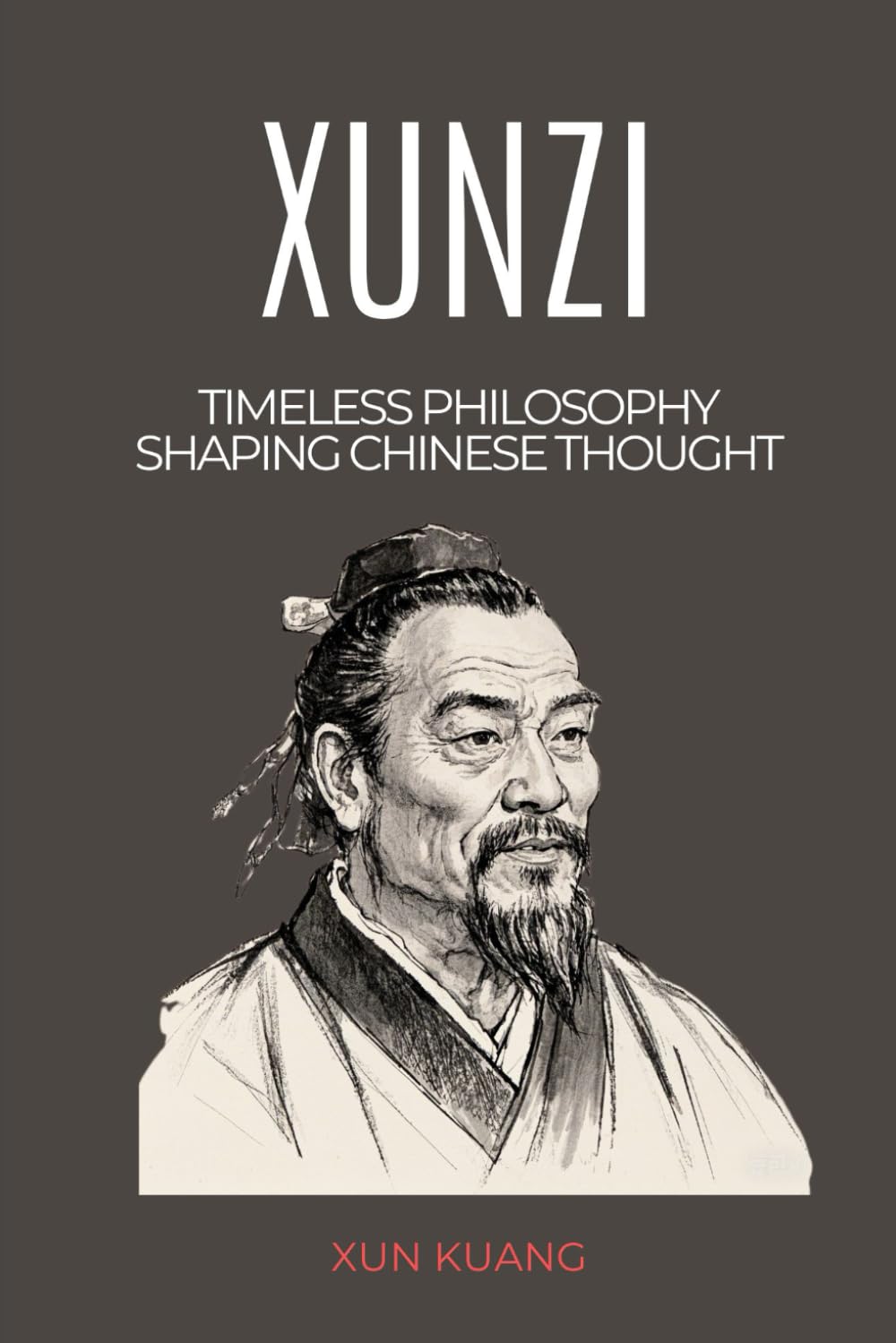
Xunzi (around 313 BC - 238 BC) , with the given name Kuang and courtesy name Qing (some say that people at that time respectfully addressed him as Qing), was called Sun Qing during the Western and Eastern Han dynasties to avoid the name taboo of Emperor Xuan of Han. A native of Zhao State in the late Warring States period, he was a thinker, philosopher, educator, a representative figure of the Confucian school, and a master synthesizer of the contention of a hundred schools of thought in the pre-Qin era. In his early years, Xunzi studied in the State of Qi. Due to his profound knowledge, he served three times as the "Jijiu" (head of the academy) of the "Jixia Academy" in the State of Qi at that time. Tian Pian, the main thinker in the Jixia Academy, had passed away during the reign of King Xiang of Qi. The State of Qi needed to fill the vacancies of lie dafu (a high - ranking official position), so Xunzi served as the Jijiu three times. Later, someone in the State of Qi slandered Xunzi, so he went to the State of Chu and was appointed by Lord Chunshen as the magistrate of Lanling (now Linyi City, Shandong Province, China). After the death of Lord Chunshen, Xunzi was removed from his post and lived in Lanling (now Linyi City, Shandong Province, China) until his death. Xunzi made quite remarkable contributions to the rearrangement of Confucian classics. The book "Xunzi", also known as "Xunqingzi", centrally reflects his academic propositions and theoretical thoughts, emphasizing the regulating role of "li" (rites) in society. "Li" is not only the highest criterion for an individual's life but also the highest criterion for governing a country. Secondly, Xunzi opposed Mencius' theory of the original goodness of human nature and first advocated the theory of the original evilness of human nature. He believed that people's moral qualities are formed through acquired efforts and are the result of environmental influence and education, so he attached greater importance to the significance of acquired education. Xunzi was also an outstanding materialist thinker. He said that "the operation of nature has its own regularities", did not believe in ghosts and gods, and put forward the propositions of "controlling the mandate of heaven and making use of it" and "man can conquer nature". For Xunzi, there exist laws in the universe that do not depend on people's will, and people can utilize and transform nature.
| Gtin | 09798316021963 |
| Age_group | ADULT |
| Condition | NEW |
| Gender | UNISEX |
| Product_category | Gl_book |
| Google_product_category | Media > Books |
| Product_type | Books > Subjects > Politics & Social Sciences > Philosophy > Political |