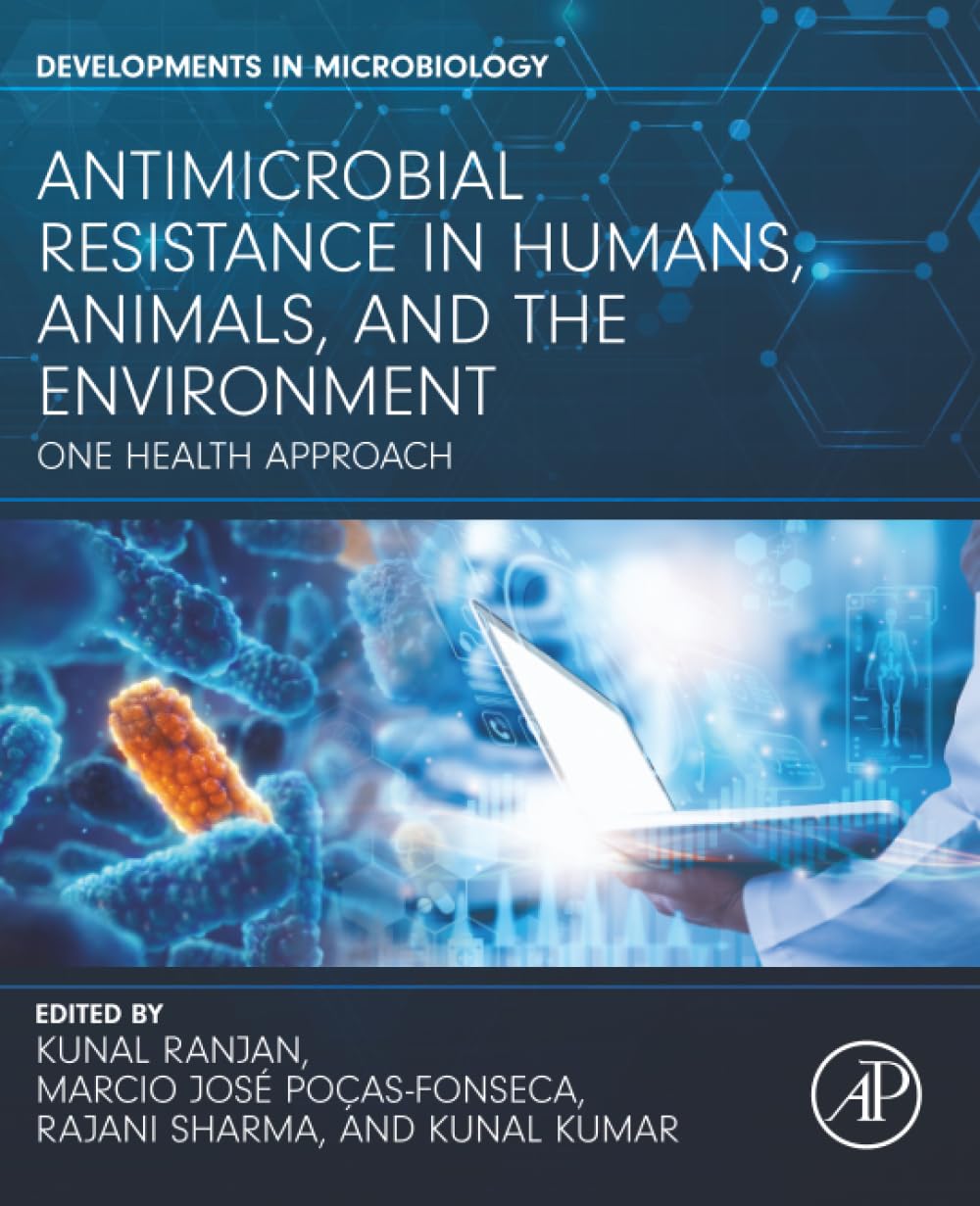
Antimicrobial Resistance in Humans, Animals, and the Environment: One Health Approach examines the global impact of antimicrobial resistance (AMR) with a specific focus on the interconnectedness between animal, human, and environmental health. The book details the origin, evolution and ecology of AMR and its updated epidemiology. It discusses the transmission of antimicrobial resistance between humans, animals, and the environment. It delves into the molecular mechanisms of drug resistance development and epidemiology in human and animal health; the different challenges in treating antimicrobial-resistant infections including rapid diagnosis and the development of new antimicrobial agents; and alternative strategies treating drug-resistant infections. Antimicrobial Resistance in Humans, Animals, and the Environment: One Health Approach is a useful comprehensive resource for researchers, academics postgraduate students, PhD students, early career researchers, and medical scientists in microbiology, infectious diseases, and biotechnology, public health professionals, clinical personnel treating AMR, or policymakers interested in implementing antimicrobial stewardship program in hospitals. Discusses antimicrobial resistance across the microbial kingdoms of bacteria, fungi, viruses, and protozoa and details the molecular mechanisms of resistance development in microbes - Examines the link Between the environment, such as climate change, industrialization, and heavy metal pollution, and the rise of resistant microbes - Offers alternative strategies to tackling AMR and the treatment of drug-resistant infections Informative resource taking a One Health approach to comprehending and mitigating antimicrobial resistance across the interconnected areas of human, animal, and environmental health Antimicrobial Resistance in Humans, Animals, and the Environment: One Health Approach examines the global impact of antimicrobial resistance (AMR) with a specific focus on the interconnectedness between animal, human, and environmental health. The book details the origin, evolution and ecology of AMR and its updated epidemiology. It discusses the transmission of antimicrobial resistance between humans, animals, and the environment. It delves into the molecular mechanisms of drug resistance development and epidemiology in human and animal health; the different challenges in treating antimicrobial-resistant infections including rapid diagnosis and the development of new antimicrobial agents; and alternative strategies treating drug-resistant infections. Antimicrobial Resistance in Humans, Animals, and the Environment: One Health Approach is a useful comprehensive resource for researchers, academics postgraduate students, PhD students, early career researchers, and medical scientists in microbiology, infectious diseases, and biotechnology, public health professionals, clinical personnel treating AMR, or policymakers interested in implementing antimicrobial stewardship program in hospitals. Dr. Kunal Ranjan, currently an Assistant Professor at Amity University Jharkhand, possesses a diverse and extensive background in microbiological research. His doctoral research focused on investigating the antimicrobial properties of epigenetic modulators, antifungal drugs, and natural products derived from actinobacteria in combatting pathogenic yeasts. Additionally, Dr. Ranjan has studied the antimicrobial activities of photodynamic therapies, providing insights into the relationship between epigenetic modification and drug resistance, particularly against fluconazole. Before pursuing his PhD, Dr. Ranjan contributed significantly to the field by investigating the role of microbes in various stages of the nitrogen cycle across different crops such as rice, wheat, maize, and vegetables. With over twenty publications to his credit and four published patents, his comprehensive research journey spans from agriculture microbiology to pathogenic microbes. Dr. Marcio José Poças-Fonseca, a distinguished Professor at the University of Brasilia in Brazil, has a rich background in molecular genetics, specifically focusing on the gene structure and regulation within cellulolytic and pathogenic fungi. His extensive research portfolio encompasses a keen interest in epigenetics, the regulatory mechanisms of virulence factor genes in pathogenic fungi, the intricate dynamics of pathogen-host interaction in the systemic mycoses model, and the exploration of actinobacteria for their production of antifungal and immunomodulatory activities through bioprospecting. His expertise extends to an in-depth examination of antimicrobial drug resistance across various pathogenic fungi, including but not limited to Paracoccidioides spp., Candida spp., and Cryptococcus spp. Dr. Marcio has authored over fifty publications and holds a granted patent. Beyond his prolific research contributions, he has mentored and supervised more than twenty-five master's and Ph
| Gtin | 09780443337024 |
| Age_group | ADULT |
| Condition | NEW |
| Gender | UNISEX |
| Product_category | Gl_book |
| Google_product_category | Media > Books |
| Product_type | Books > Subjects > Medical Books > Medicine > Internal Medicine > Pathology > Diseases > Viral |