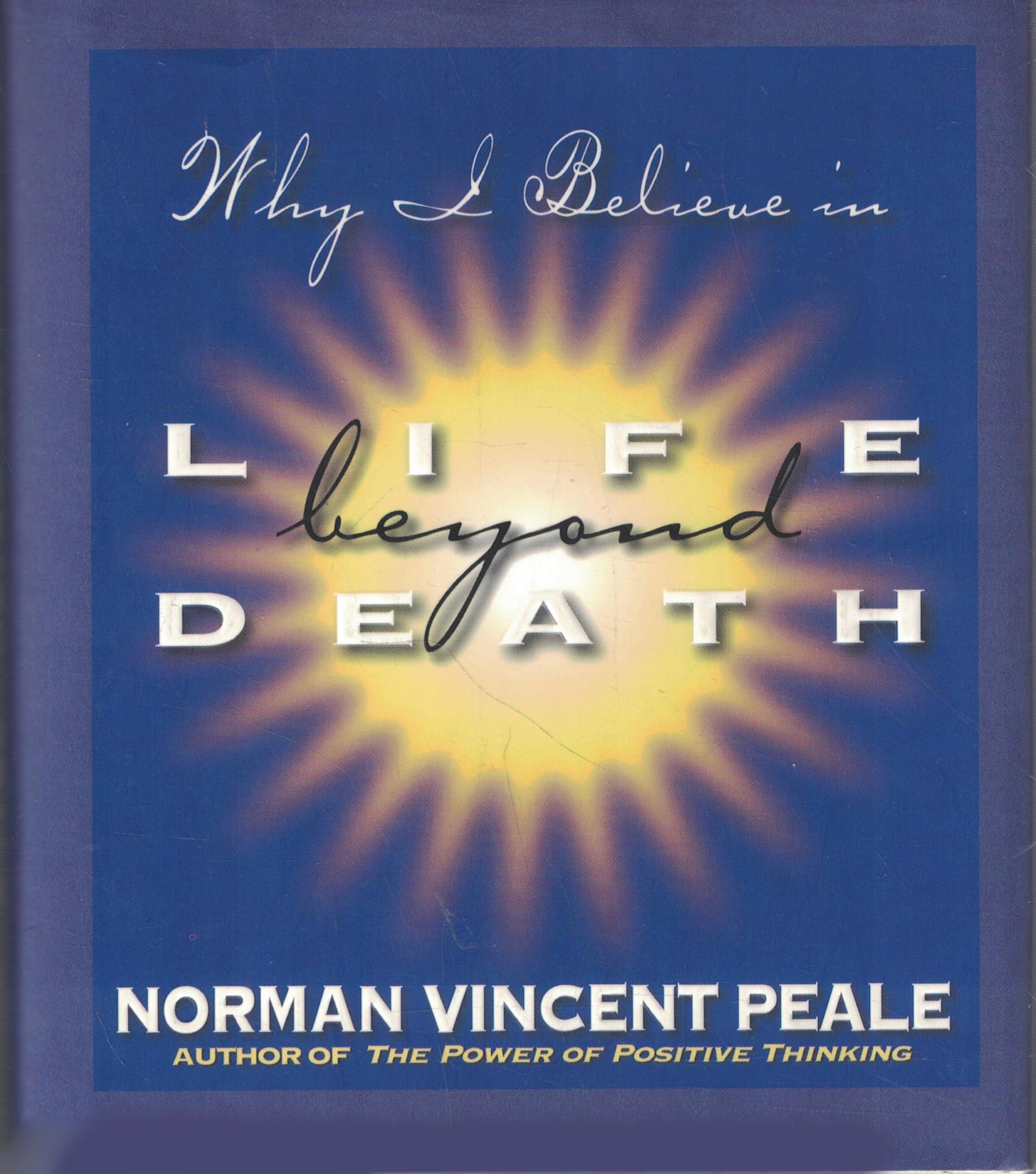
In this new book, best-selling author Norman Vincent Peale paints a compelling picture of the afterlife, one more beautiful than we may have imagined. A place where fear, suffering, and separation are banished by peace, joy, and perfect love. Where war, hatred, and death are no longer part of the human experience. Where our souls will be finally healed. Where our eyes will feast on the beauty and power of an all-loving God. Filled with stories of those who have had remarkable visions of heaven, Life Beyond Death also looks at what the Bible teaches us about the next life. By exploring the connection between this life and the next Norman Vincent Peale helps us live with greater hope and peace no matter the difficulties we face. He sets our hearts longing to know more about the eternal home God has prepared for all who love and follow him. Best-selling author Norman Vincent Peale lifts the curtain between this life and the next by recounting stories of those who have crossed over and by looking at what Jesus and the Scriptures teach us about life after death. His words are eloquent, his faith is bracing. Anyone who has lost a loved one, wondered about the purpose of suffering, or contemplated the mystery of the next life will be comforted and encouraged by the words of this well-loved author, for many years the pastor of Marble Collegiate Church in New York City and the founder of Guideposts, America's favorite inspirational magazine. Norman Vincent Peale was the founder of Guideposts magazine and of the Blanton-Peale Institute of Religion and Health. Dr. Peale also served as the longtime minister of New York City's Marble Collegiate Church. His books include The Power of Positive Thinking (over 15 million copies sold), My Favorite Quotations, and My Favorite Prayers. Reverend Peale was born into his eternal life on Christmas Eve 1994. Chapter One The End of Tears One of the profound sorrows of this world is the loss by death of our loved ones. It is a universal grief, for everywhere the funeral cortege winds solemnly to God s acre. No day passes but human minds wistfully ask the question, Will we meet our loved ones again? One tragic night, eighty-four years ago, a mighty ship was crossing the North Atlantic. It was her maiden voyage. She was the pride of Britain s fleet, the greatest ship afloat. Her name was Titanic. Parties were in progress. Laughter and music floated out over the starlit waters. Everyone was happy. The magic of the silver moonlight turned the water into phosphorescence. The great engines throbbed steadily on as, with lights ablaze, the noble vessel glided through calm seas. Gradually the air grew chill, but those on deck thought it only the freshness of a spring night. Suddenly a dark green thing of terrifying size loomed dead ahead in the path of the ship. Vainly bells rang. The steersman put the wheel hard over, but no power on earth could stop that momentum or avoid the crash. There was no escape. Then came scenes of immortal heroism. The innate nobility of human beings facing eternity was proved once again. The ship s lights went out, and on her slanting decks hundreds were hushed by the solemn strains of the band playing Nearer, My God, to Thee. This story, one of the most tragic in the experience of our time, brings to mind the solemn philosophy of Charles Frohman, who, on the deck of the sinking Lusitania, said to a group of friends: Why fear death? Death is only a beautiful adventure. To be proficient in the art of living, we must know somewhat about dying, for, strangely enough, dying is an important factor in living. Death, we believe, is but a stage in life, a change into a different form of existence like a caterpillar changing into a butterfly or a door opening into a larger life. In a world of wonders, the possibility of life after death grows apace. It is remarkable how dogmatic and unscientific some scholars can become at times. For example, the British scientist who, some years ago, said, At death the spirit of man will be extinguished like a candle flame. Of course, the question is, How does he know that? Where is his evidence? The plain fact is that he knows nothing about it, for, as Shakespeare pointed out, he is dealing with the undiscovered country from whose bourne no traveler returns. Scientists like him are now rather out of date, for the greater scientific men tend to reset theism and more spiritual thinking at the center of their explanations about the universe and though, manifestly, they have not proven it and perhaps cannot categorically do so, their thinking is in the direction of faith in immortality. It is natural that we should have an insatiable curiosity concerning the afterlife. When Henry Thoreau lay dying at Concord, his friend, Parker Pillsbury, sat by his side and said, Henry, you are so near to the border now, can you see anything on the other side? To which Thoreau, with a feeble smile, replied, One world at a time, Parker. This may have be
| Gtin | 09780310209089 |
| Age_group | ADULT |
| Condition | NEW |
| Gender | UNISEX |
| Product_category | Gl_book |
| Google_product_category | Media > Books |
| Product_type | Books > Subjects |