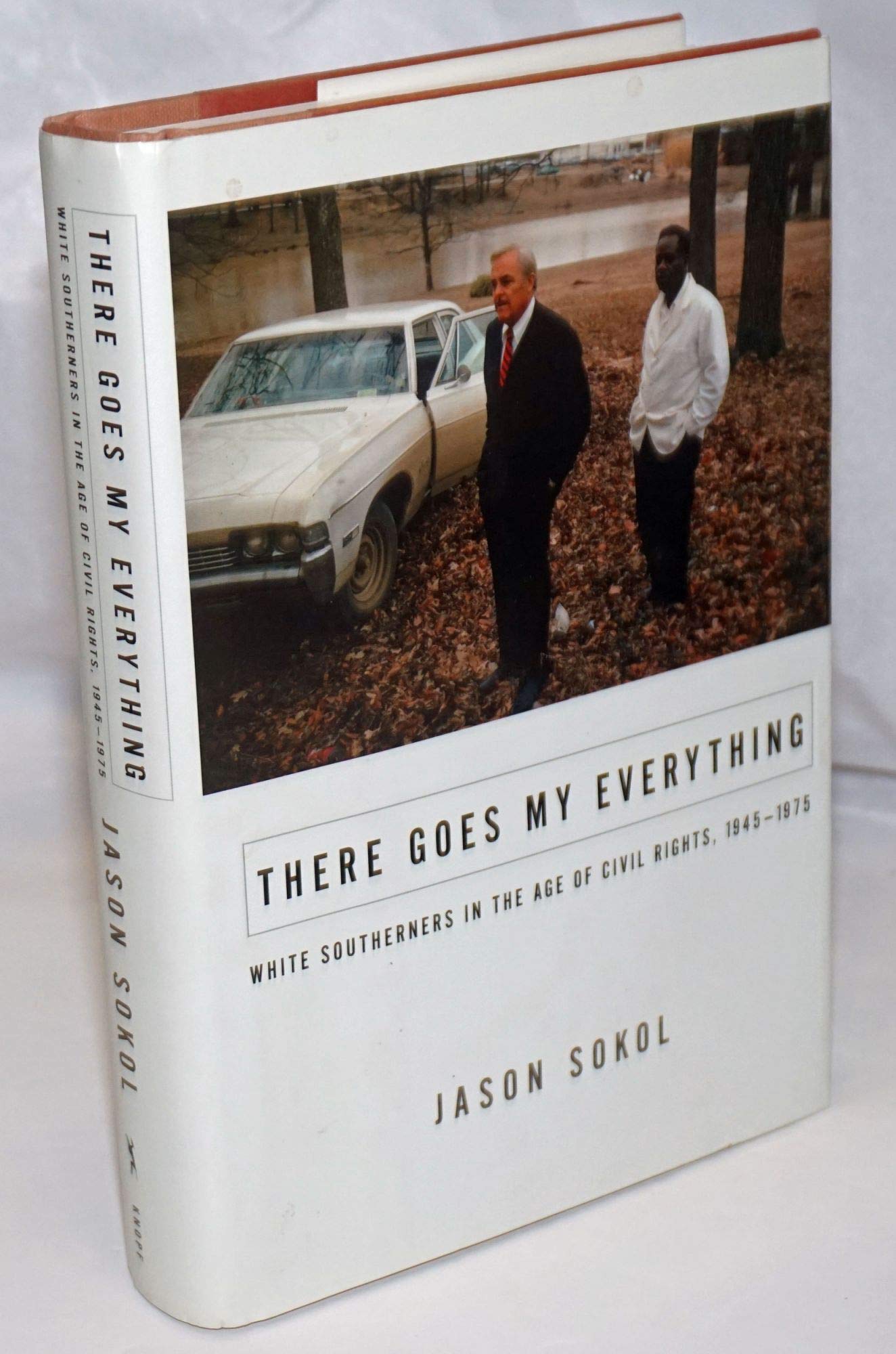
While the landmarks of the civil rights movement have become indelible parts of our collective memory, few have written about what life was like for white southerners who lived through that historic time. Now, in his brilliant debut book, historian Jason Sokol explores the untold stories of ordinary people experiencing the tumultuous decades that forever altered the American landscape. So often historical accounts of the era have focused on the movement’s most dramatic moments and figures, and paid greatest attention to the brave steps taken by blacks to effect long-awaited change. In this riveting book, Sokol goes beyond the 1955 Montgomery bus boycott, the 1960 student sit-ins, and the soul-stirring speeches of Martin Luther King, Jr., and into the lives of middle- and working-class whites whose world was becoming unrecognizable to them. He takes us to New Orleans’s Ninth Ward, where, in 1960, a painful episode of school integration brought out the fiercest prejudices in some and made accidental radicals of others; to Ollie’s Barbecue in Birmingham and Pickrick Fried Chicken in Atlanta, and thousands of lunch counters in between, where “some white employees greeted black customers as though they had been patrons for years; others slammed doors in their faces; still more served them hesitantly and reluctantly.” There Goes My Everything traces the origins of the civil rights struggle from World War II, when some black and white American soldiers lived and fought side by side overseas (leading them to question Jim Crow at home), to the beginnings of change in the 1950s and the flared tensions of the 1960s, into the 1970s, when strongholds of white rule suddenly found themselves overtaken by rising black political power. Through it all, Sokol resists the easy categorization of whites caught in the torrent of change; rather, he gives us nuanced portraits of people resisting, embracing, and questioning the social revolution taking place around them. Drawing on recorded interviews, magazine bureau dispatches, and newspaper editorials, Sokol seamlessly weaves together historical analysis with firsthand accounts. Here are the stories of white southerners in their own words, presented without condescension or moral judgment. An unprecedented picture of one of the historic periods in twentieth-century America. Historian Sokol examines how the civil rights movement challenged long-held notions among southern whites about the character and circumstances of their black neighbors and workers and their own place in society. The movement for racial equality changed race relations and altered attitudes, transformed institutions and towns, and upended tradition. It also caused profound changes in whites as individuals. Drawing on recorded interviews and published and unpublished articles chronicling the turbulent times between 1945 and 1975, Sokol presents a portrait of white people in the frontline southern towns, from Little Rock and Atlanta to Birmingham and rural North Carolina. Sokol illustrates the complexity of the human drama behind the civil rights movement from the perspective of those whose cherished way of life was gone forever, those who felt liberated, and those who found new, subtler ways to practice their hate. This is a fascinating look at a side of the civil rights movement that has not been a widely explored aspect of one of the greatest social transformations in U.S. history. Vanessa Bush Copyright © American Library Association. All rights reserved Advance Praise for Jason Sokol’s There Goes My Everything : “For most of us, ‘white southerners’ remain an undifferentiated mass of forces hostile to the social and political progress of African-Americans in the civil rights era. Jason Sokol brilliantly reveals, for the first time, that this image was only one dimension of a vastly more complex range of emotions and opinions within the white southern community between 1945 and 1975. There Goes My Everything is a subtle, nuanced, and strikingly original study that explores the ways in which the white community was not only threatened by but also conflicted about the black revolution that engulfed it, and it does so with sympathy and grace.” --Henry Louis Gates, Jr. “It’s difficult not to approach Sokol’s book with sheer astonishment that it has been written by one so young...but in truth, just about any scholar in the field would be happy to claim There Goes My Everything as his or her own work.” -- The Washington Post Book World “A fascinating and remarkably empathetic assessment of how white southerners experienced the civil-rights movement.” -- The Atlantic Monthly “Sokol never apologizes or attempts to mitigate the often brutal and violent consequences of Southern racism. His eloquent presentation, with all of its complications, provides an invaluable and much-needed addition to our understanding of how the Civil Rights movement was actually lived.” -- Publishers Weekly “This debut...
| Gtin | 09780307263568 |
| Age_group | ADULT |
| Condition | NEW |
| Gender | UNISEX |
| Product_category | Gl_book |
| Google_product_category | Media > Books |
| Product_type | Books > Subjects > Politics & Social Sciences > Politics & Government > Specific Topics > Civil Rights & Liberties |