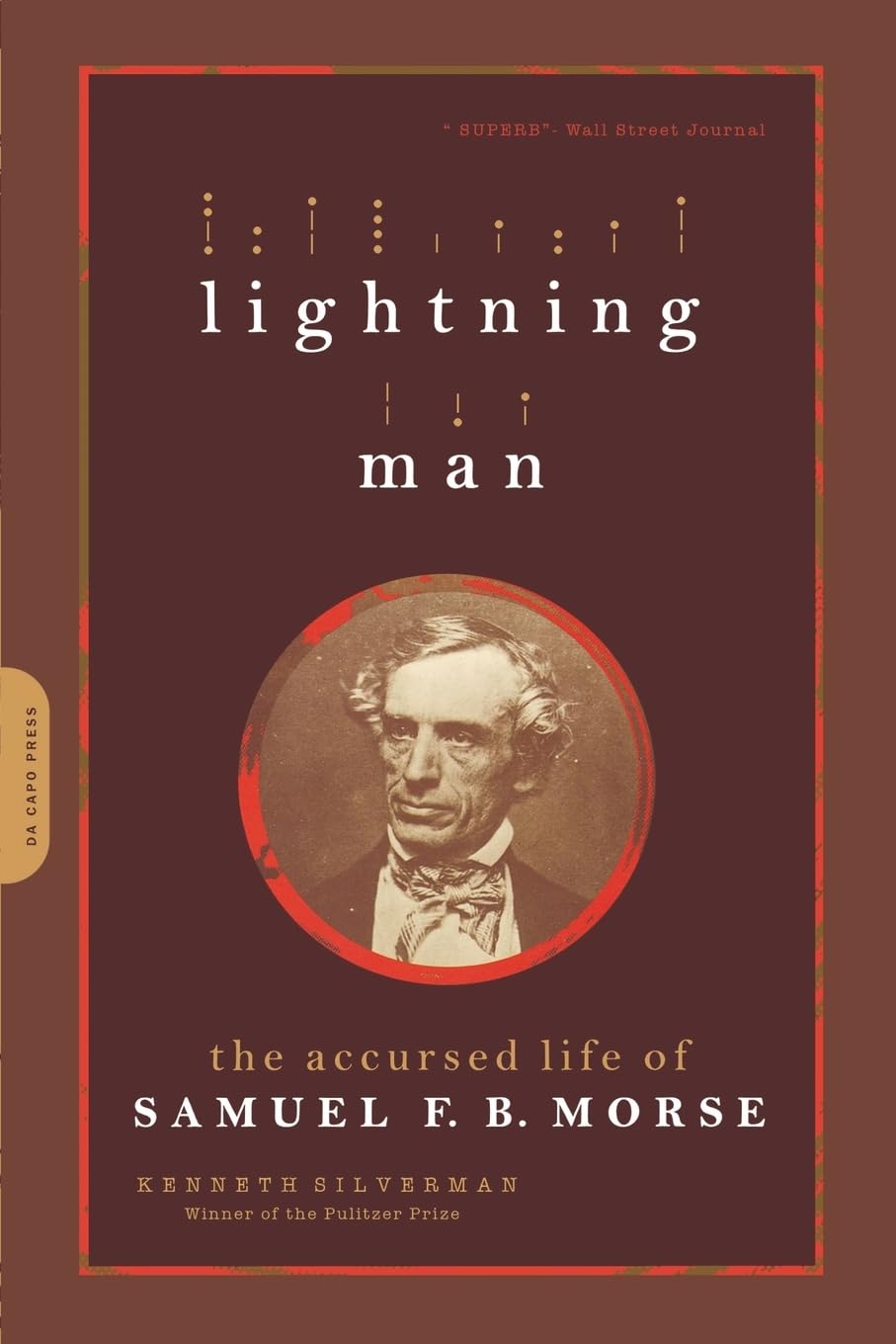
This brilliantly conceived biography is the very American tale of a quiet man, raised by religious zealots, who became a gifted and prolific painter (more than three hundred portraits and historical canvases), became the first Professor of Fine Arts at an American college, and founded the National Academy of Design. A classic overachiever, this was simply not enough for Samuel F. B. Morse; he subsequently ran for Congress and mayor of New York. Lastly, in his most famous life's work, he invented a machine that was to transform commerce, communication, transportation, military affairs, diplomacy, and the course of the modern world. What invention could be so revolutionary? The telegraph, of course-and the eponymous Morse code. Here is the story of an incredible invention, and an engrossing life, by a Bancroft- and Pulitzer Prize-winning author. Born and raised in Manhattan, Kenneth Silverman is Professor Emeritus of English at New York University. His other books include Timothy Dwight, A Cultural History of the American Revolution, Edgar A. Poe: Mournful and Never-Ending Remembrance, and Houdini!!! The Life of Ehrich Weiss . He is winner of the Bancroft Prize in American History and the Pulitzer Prize for Biography for The Life and Times of Cotton Mather . Lightning Man The Accursed Life of Samuel F. B. Morse By Kenneth Silverman Da Capo Press Copyright © 2003 Kenneth Silverman All right reserved. ISBN: 0-306-81394-7 Contents FinleyONE: Geography......................................................3TWO: No One Uninspired by the Muses May Enter.......................21THREE: A Terrible Harum-Scarum Fellow...............................40FOUR: An Affection of the Heart.....................................67MorseFIVE: Il Diavolo....................................................97SIX: Anomalous, Nondescript, Hermaphrodite..........................124SEVEN: High Attribute of Ubiquity...................................147EIGHT: Traveling on a Snail's Back..................................174NINE: Beware of Tricks..............................................192TEN: Hurrah Boys Whip Up the Mules..................................220Samuel F. B. MorseELEVEN: Mere Men of Trade...........................................249TWELVE: Tantalus Still..............................................274THIRTEEN: The Great Telegraph Case..................................297FOURTEEN: A True Social Fraternity..................................325FIFTEEN: Can't! Sir, Can't!.........................................346SIXTEEN: Forward....................................................370CommandadorSEVENTEEN: Is This Treason? Is This Conspiracy?.....................391EIGHTEEN: Visions of Receding Glory.................................415Coda: 1872-2000.....................................................441Documentation.......................................................447Acknowledgments.....................................................483Index...............................................................485Illustration Credits................................................501 Chapter One Geography (1789-1811) On April 30, 1789, Jedediah Morse was installed as pastor of the First Congregational Church of Charlestown, Massachusetts. The occasion was triply significant to him. Twenty-seven years old, he had come to his vocation by study at Yale and graduate work in theology. He felt eager to promote the interests of religion but awed to contemplate the degenerate state of his fellow mortals, who every day crucified their Redeemer anew. The labor now to be undertaken by him was worthy but daunting, "a good work," he said, "but alas who is sufficient for these things." The place mattered to Jedediah no less than the occasion. The First Church was one of the oldest in America, a fit pulpit for a man whose ancestors had emigrated to the New World in 1635, among the first settlers of Puritan New England. The church stood, too, in the shadow of Bunker's Hill. Just fourteen years earlier, armed provincials had defended the hill against three assaults by British infantry and marines. And for Jedediah, the date was no less symbolic than the place. On the same day, on the balcony of New York City's Federal Hall, George Washington was inaugurated as the first President of the United States and called on the new nation to preserve "the sacred fire of liberty." Jedediah revered him as an epitome of republican virtue-self-sacrificing, pious, restrained, great because he was good, indeed, Jedediah said, "the greatest Man alive ." Two weeks after the momentous day of his settlement, Jedediah married twenty-three-year-old Elizabeth Finley, a granddaughter of the president of Princeton College. In appearance they were unlike, to judge from a later family portrait: Jedediah tall, slender, old-fashioned -looking in his knee breeches and black silk stockings; Elizabeth stoutish, buxom, jowly-"no dwarf,"
| Gtin | 09780306813948 |
| Mpn | Black & White Illustrations |
| Age_group | ADULT |
| Condition | NEW |
| Gender | UNISEX |
| Product_category | Gl_book |
| Google_product_category | Media > Books |
| Product_type | Books > Subjects > Biographies & Memoirs > Leaders & Notable People > Military > American Revolution |