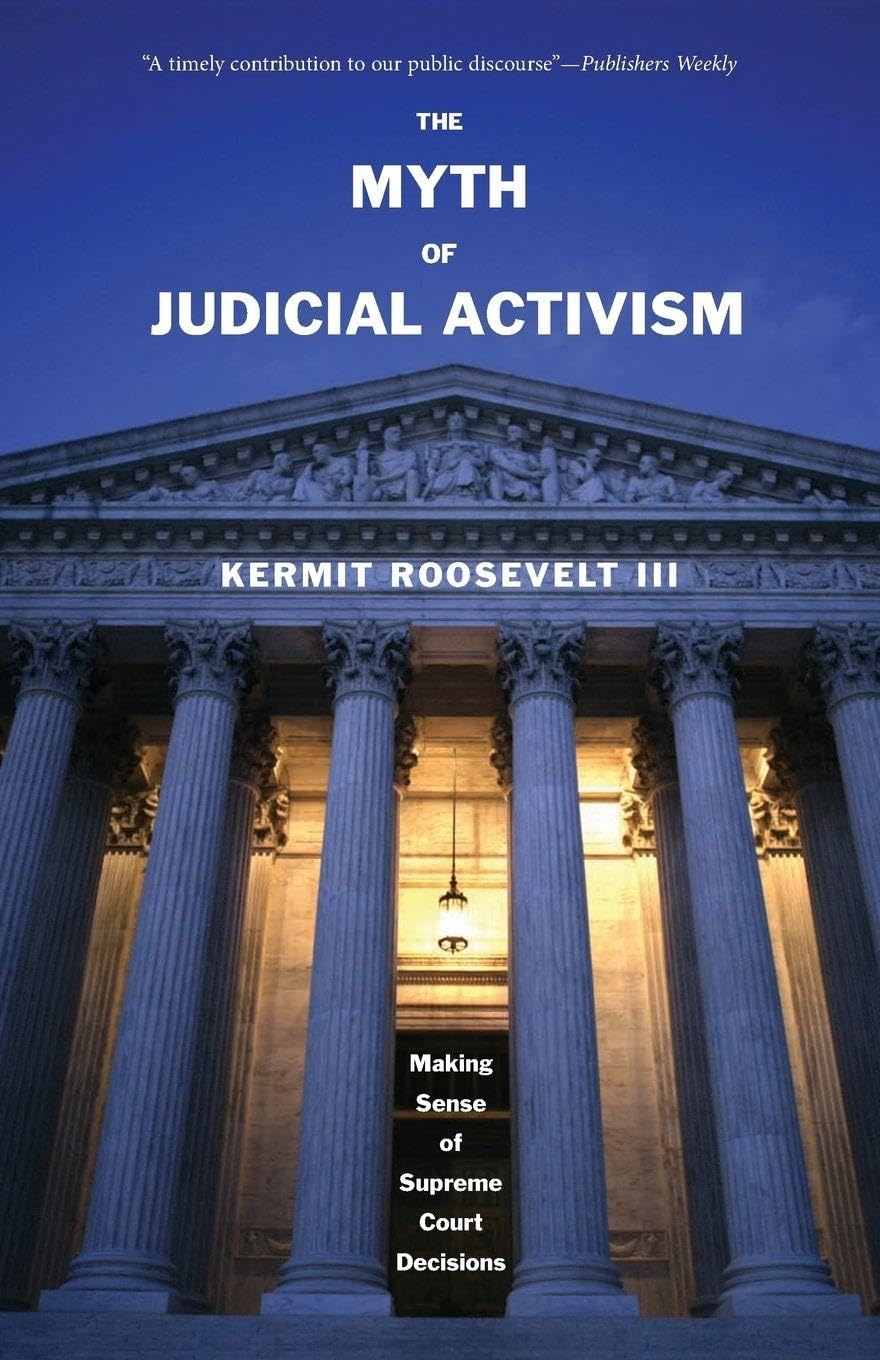
Can the Constitution change with the times without forsaking the framers’ original intent? This carefully considered book is a welcome addition to the debate over “judicial activism.” Constitutional scholar Kermit Roosevelt III offers an elegantly simple way to resolve the heated discord between conservatives, who argue that the Constitution is immutable, and progressives, who insist that it is a living document that must be reinterpreted in new cultural contexts so that its meaning evolves. Roosevelt uses plain language and compelling examples to explain how the Constitution can be both a constant and an organic document. Recent years have witnessed an increasing drumbeat of complaints about judicial behavior, focusing particularly on Supreme Court decisions that critics charge are reflections of the Justices’ political preferences rather than enforcement of the Constitution. The author takes a balanced look at these controversial decisions through a compelling new lens of constitutional interpretation. He clarifies the task of the Supreme Court in constitutional cases, then sets out a model to describe how the Court creates doctrine to implement the meaning of the Constitution. Finally, Roosevelt uses this model to show which decisions can be justified as legitimate and which cannot. "A graceful and compelling account of constitutional decision-making. Roosevelt shows how judges shape workable legal rules from constitutional meanings when reasonable minds can and do disagree. As learned as it is accessible, this book is a welcome antidote to today's overheated constitutional rhetoric."-Jack M. Balkin, Knight Professor of Constitutional Law and the First Amendment, Yale Law School "Kermit Roosevelt has written a remarkably accessible, conversational book that sets out with admirable clarity what constitutes (and what is not) 'judicial activism' and how we can accept as 'legitimate' decisions with which we disagree. One can only hope that it gets the wide readership it deserves."-Sanford Levinson, author of "Our Undemocratic Constitution: Where the Constitution Goes Wrong (and How We the People Can Correct It)" Kermit Roosevelt isa professor of constitutional law at the University of Pennsylvania Law School.Born in Washington, DC, he attended Harvard University and Yale Law School.Before joining the Penn faculty, he clerked for DCCircuit Judge Stephen F. Williams and Supreme Court Justice David Souter, andpracticed law in Chicago. His experiences clerking and practicing law informedhis first novel, the national campus bestseller In the Shadow of the Law (FSG, 2005), winner of the Philadelphia AthenaeumLiterary Award. His latest novel, Allegiance , is a finalist for the 2016 Harper Lee Prize for LegalFiction. To learn more about Kermit Roosevelt, visitkermitroosevelt.net.
| Gtin | 09780300126914 |
| Mpn | Black & White Illustrations |
| Age_group | ADULT |
| Condition | NEW |
| Gender | UNISEX |
| Product_category | Gl_book |
| Google_product_category | Media > Books |
| Product_type | Books > Subjects > Politics & Social Sciences > Politics & Government > United States > Judicial Branch |