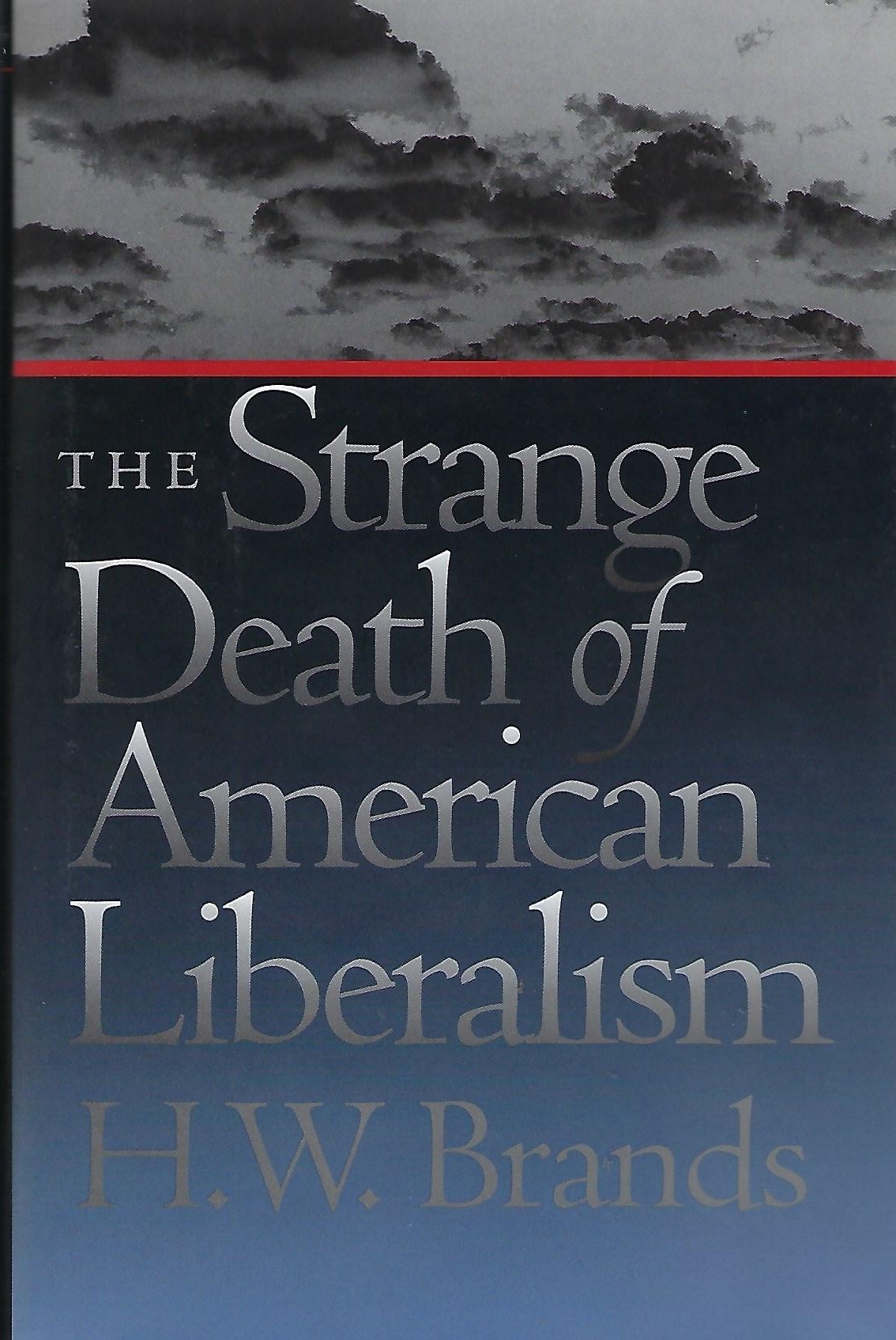
In this provocative book, H. W. Brands confronts the vital question of why an ever-increasing number of Americans do not trust the federal government to improve their lives and to heal major social ills. How is it that government has come to be seen as the source of many of our problems, rather than the potential means of their solution? How has the word liberal become a term of abuse in American political discourse? From the Revolution on, argues Brands, Americans have been chronically skeptical of their government. This book succinctly traces this skepticism, demonstrating that it is only during periods of war that Americans have set aside their distrust and looked to their government to defend them. The Cold War, Brands shows, created an extended--and historically anomalous--period of dependence, thereby allowing for the massive expansion of the American welfare state. Since the 1970s, and the devastating blow dealt to Cold War ideology by America's defeat in Vietnam, Americans have returned to their characteristic distrust of government. With the collapse of the Soviet Union in 1991, Brands contends, the fate of American liberalism was sealed--and we continue to live with the consequences of its demise. Brands (Texas A&M) is a prolific and versatile historian who has written books about the Revolutionary era (The First American: The Life and Times of Benjamin Franklin), the late 19th and early 20th centuries (TR: The Last Romantic), and the Cold War era (e.g., The Devil We Knew). He describes his latest, less a scholarly work than an extended essay, as an "argument." The case Brands argues is that postwar American liberalism was itself a product of the Cold War and that, with the end of the Cold War threat, Americans returned to their traditional skepticism toward government, a change that in effect ended liberalism, too. While Brands makes some good points, though discursively, his mission is only to make them; he does not attempt a larger, richer, and subtler story. Not Brands at his best, but an optional purchase for academic libraries. Robert F. Nardini, Chichester, NH Copyright 2001 Reed Business Information, Inc. Texas A & M historian Brands ponders "the unsolved mystery of American politics . . . : Who killed liberalism?" Brands' conviction that the U.S. has been "a nation of skeptics" about the federal government throughout its history is central to his answer. Brands' first two chapters trace that skepticism, attributing all exceptions--periods of expanding federal power--to the nation's wars. But after World War II, Brands argues, the cold war demanded that Americans continue to empower the federal government, and concern about national security justified a wide spectrum of "liberal" programs, from highway construction and education funding to civil rights legislation and the War on Poverty. When this cold war consensus supporting federal action collapsed in the face of Vietnam, Watergate, and political lies, Americans' traditional skepticism about government reasserted control of the political arena. Other historians--Garry Wills in A Necessary Evil (1999) comes to mind--may question Brands' fundamental premise, suggesting skepticism has been just one of many American attitudes toward government, but they will appreciate his crisp, accessible argument. Mary Carroll Copyright © American Library Association. All rights reserved "A brillian autopsy of a dearly departed American political tradition. . . will be of interest to a wide range of readers." -- Kirkus Reviews "An engaging and judiciously researched book. It offers a compelling historical explanation for the current state of political discourse." -- Douglas Brinkley, director, Eisenhower Center for American Studies at the University of New Orleans "H.W. Brands has once again written a lucid, brisk, accessible, incisively argued book with laser-like focus." -- Michael Sherry, author of In the Shadow of War Brands' work contributes mightily to the discussion of what liberalism is. He succeeds with great verve and style. -- David Turner, Raleigh News and Observer Brands' work contributes mightily to the discussion of what liberalism is. He succeeds with great verve and style. -- David Turner, Raleigh News and Observer H. W. Brands is Distinguished Professor of History and Ralph R. Thomas '21 Professor in Liberal Arts, Texas A&M University. He is the author of numerous books, including T.R.: The Last Romantic and The First American: The Life and Times of Benjamin Franklin.
| Gtin | 09780300090215 |
| Age_group | ADULT |
| Condition | NEW |
| Gender | UNISEX |
| Product_category | Gl_book |
| Google_product_category | Media > Books |
| Product_type | Books > Subjects > Politics & Social Sciences > Politics & Government > Political Science > History & Theory |