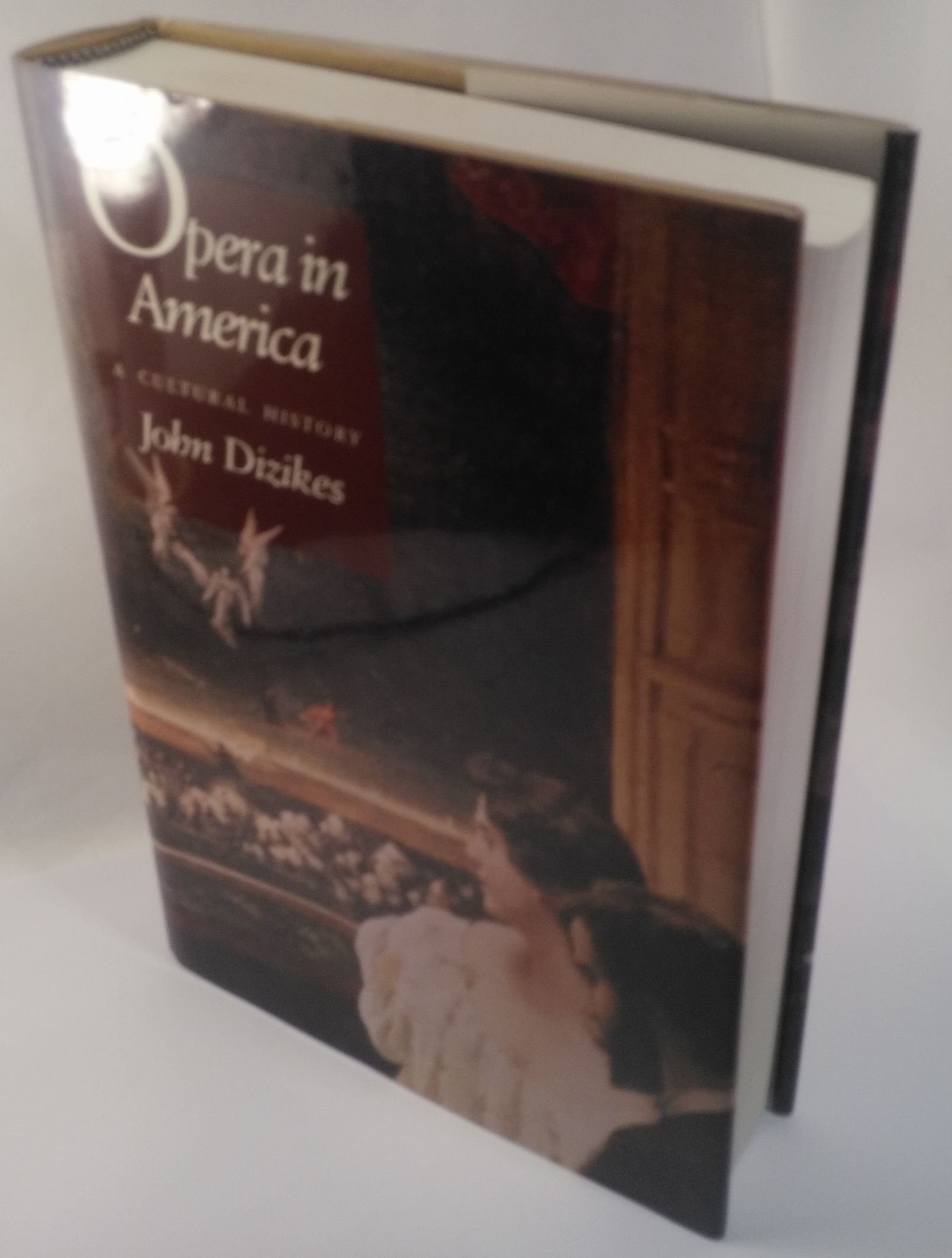
Looks at American opera productions, theaters, personalities, and companies, discusses the influence of Black theater, operetta, and Broadway musicals, and describes opera's place in American culture A dozen years in the making, Dizikes' work, which won the 1993 National Book Critics Circle Award for Criticism, is a milestone achievement. He begins his chronicle in the early 19th century, tracing the expansion of opera in the United States while exploring its influences at the hands of politics, war and immigration. The staging of "The Bohemian Girl" in 1844, writes Dizikes, marked the birth of modern opera in the U.S. He fills out his research with rich detail about the singers, conductors, composers, patrons and fans who collectively have shepherded opera into every corner of the country--from large urban centers to rural backwaters. This substantial, important volume is also a pleasure to read. Although structured in an apparently "operatic" manner, with chapters grouped into six "acts," it is more of a collage comprised of portraits of many of the most significant impresarios, patrons, venues, and, of course, performers of opera throughout America's history. The author (American studies, Univ. of California-Santa Cruz) rightly includes the more vernacular forms of operetta and the Broadway musical alongside "grand opera" in his purview. Like Arthur Loesser in his exemplary Men, Women and Pianos: A Social History (1954), Dizikes has written a fine general history of his subject that is also a real page-turner. Highly recommended. - E. Gaub, Villa Maria Coll., Buffalo, N.Y. Copyright 1993 Reed Business Information, Inc. A smart, funny, splendidly written, and strikingly illustrated panorama of the New World's adoption of the Old World's most lavish and lively art form. Dizikes (American Studies/UC at Vera Cruz) offers a wealth of insight and history--American, theatrical, and musical--in this monumental labor of love, a thorough review of the roots and blossoms of the operatic experience in the US from the 18th century to the present day. The first American tour of legendary singing teacher Manuel Garcia and his talented offspring in the Barber of Seville; the history of opera in New Orleans and Chicago; the opera house owned by robber baron Jim Fisk (where Fisk planned to import Offenbach himself--a plan interrupted when Fisk was murdered by a jealous rival); the founding of the Metropolitan and its German seasons under the batons of the Damrosch clan; Caruso, Marian Anderson, Milton Cross, Maria Callas, Lincoln Center, and a noncondescending treatment of Stephen Sondheim's serious music dramas: The scope is comprehensive, and it's hard to imagine that there are many specialists, let alone general readers, who won't find things they didn't know or details they didn't previously appreciate. In such a heroic undertaking, questions and quibbles are bound to arise: To call A Funny Thing Happened on the Way to the Forum an opera is stretching it, and, as Dizikes approaches our own day, his ease of analysis becomes less sure. On the plus side, his view of opera in America isn't New York-centric, especially important because so many notable events in our operatic history happened outside that metropolis. In terms of information and entertainment per page, a bargain. Should attract and fascinate a wide audience, lovers of Americana as well as opera fans. (128 illustrations) -- Copyright ©1993, Kirkus Associates, LP. All rights reserved. Dizikes has assembled a thoroughly enlightening walk through opera history. . . . [A] comprehensive chronicle with colorful detail. -- Publishers Weekly John Dizikes is a fellow of Cowell College, University of California at Santa Cruz, and teaches in the American studies program.
| Gtin | 9780300054965 |
| Age_group | ADULT |
| Condition | NEW |
| Gender | UNISEX |
| Product_category | Gl_book |
| Google_product_category | Media > Books |
| Product_type | Books > Subjects > Arts & Photography > Music > Musical Genres > Opera |