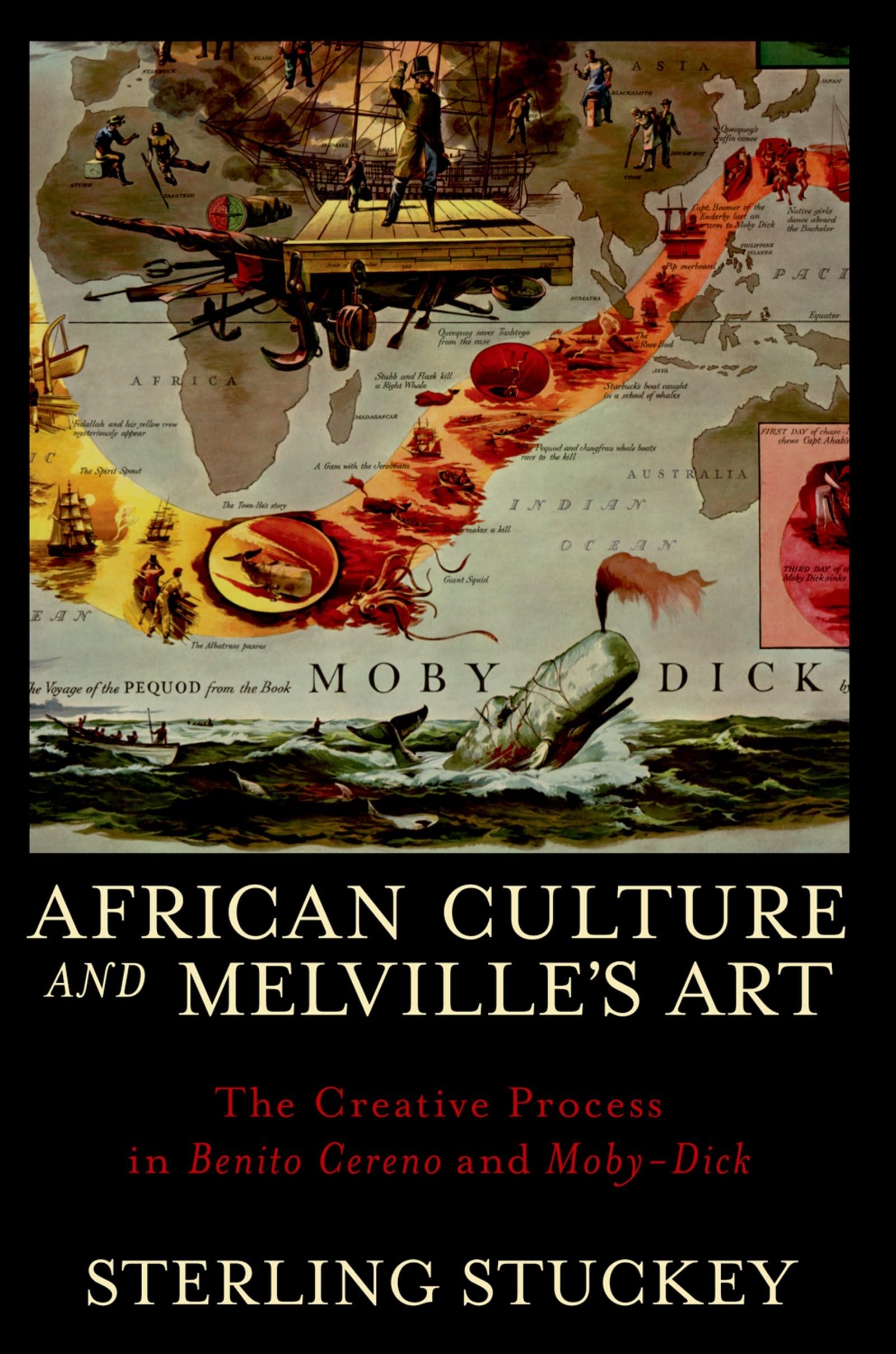
Although Herman Melville's masterworks Moby-Dick and Benito Cereno have long been the subject of vigorous scholarly examination, the impact of African culture on these works has received surprisingly little critical attention. Presenting a groundbreaking reappraisal of these two powerful pieces of fiction, Sterling Stuckey reveals how African customs and rituals heavily influenced one of America's greatest novelists. The Melville that emerges in this innovative, intertextual study is one profoundly shaped by the vibrant African-influenced music and dance culture of nineteenth-century America. Drawing on extensive research, Stuckey reveals how celebrations of African culture by black Americans, such as the Pinkster festival and the Ring Shout dance form, permeated Melville's environs during his formative years and found their way into his finest fiction. Also demonstrated is the extent to which the author of Moby-Dick is indebted to Frederick Douglass's depiction of music, especially the blues, in his classic slave narrative. Connections between Melville's work and African culture are also extended beyond America to the African continent itself. With readings of hitherto unexplored chapters in Delano's Voyages and Travels in the Northern and Southern Hemispheres and other nonfiction sources--such as Joseph Dupuis's Journal of a Residence in Ashantee --Stuckey links Benito Cereno and Moby-Dick , pinpointing the sources from which Melville drew to fashion major characters that appear aboard both the Pequod and the San Dominick . Combining inventive literary and historical analysis, Stuckey shows how myriad aspects of African culture coalesced to create the unique vision conveyed in Moby-Dick and Benito Cereno . Ultimately, African Culture and Melville's Art provides a wealth of insight into the novelist's expressive power and the development of his distinct cross-cultural aesthetic. "Revisiting Melville's New York and Albany neighborhoods, Sterling Stuckey has given us a stunning reconstruction of the genesis of Moby-Dick and Benito Cereno. His Melville is an 'Africanist' in the best sense: in frequent contact with Ashantee culture, and inspired by the music and dance of the slaves to forge his own poetics of cheer and gloom." --Wai Chee Dimock, Yale University "In African Culture and Melville's Art , Sterling Stuckey brings his extraordinary talents as a historian and critic to bear on Herman Melville, and in the process he gives us brilliant and original readings of Moby-Dick, Benito Cereno, and Melville's world. It is a stunning achievement and should be required reading for anyone interested in American culture."-John Stauffer, Harvard University "Studying Melville's artful treatment of Douglass, Dupuis, Delano, and Bowditch, Professor Stuckey expands and deepens our knowledge of Melville's creative employment of African culture in Benito Cereno and Moby-Dick. Stuckey's book is full of discoveries along freshly mapped paths that invite our further investigation." --Frederick Bernard, Aquinas College "Our greatest scholar of African American culture finds a kindred spirit in our greatest nineteenth-century novelist. If you want to know how African the roots of American culture are, from the blues to Melville, this marvelous, adventuresome and elegant book is for you." --David R. Roediger, University of Illinois, Urbana-Champaign "With the eloquence of a poet and the erudition of a scholar, historian Sterling Stuckey employs cross-disciplinary methods in this brilliant analysis of the African sources and intertextual resonances in Herman Melville's oeuvre. This definitive study deepens our understanding of the writer's creative genius." - -Miriam DeCosta-Willis, University of Maryland, Baltimore County "Alone among major white American writers of the nineteenth century, Melville deployed creatively, sensitively, and without the then fashionable cultural condescension, a compelling black presence at the heart of some of his most morally challenging and important fiction. By skillfully and persuasively tracking the cultural sources available to the novelist by way of informing and fleshing out that inspiration, Stuckey deepens, enriches, and enlarges our understanding and appreciation of Melville's accomplishments." --Ekwueme Michael Thelwell, University of Massachusetts, Amherst "Stuckey's African Culture and Melville's Art presents new and welcomed perspectives for Melville studies. His biographical, cultural, and intertextual analyses uncover interesting and relevant information. Ultimately, Stuckey sheds some light on the shrouded and compelling craft of one of America's finest writers." --Suite101.com "[A] considerable achievement...In his attention especially to race and social history, to the global contexts for American authorship, and the interplay of American exceptionalism and transnationalism, Stuckey contributes significantly to an ongoing amplification of the boundaries
| Gtin | 09780199768561 |
| Mpn | Refer To Sapnet. |
| Age_group | ADULT |
| Condition | NEW |
| Gender | UNISEX |
| Product_category | Gl_book |
| Google_product_category | Media > Books |
| Product_type | Books > Subjects > Literature & Fiction > History & Criticism > Regional & Cultural > United States |