Before you dive into investing, you’ve got to know the basics—and understanding bull vs. bear markets is about as fundamental as it gets. Whether you’re just starting or you’ve got a pile of stocks already, knowing how these cycles work helps you make better calls and keeps your emotions in check.
Here’s the deal: According to historical data from S&P Dow Jones Indices and market research by the Corporate Finance Institute (CFI), over the last hundred years, the U.S. stock market has spent way more time in bull markets than in bear ones. Still, when bear markets show up, they hit fast and hard—enough to rattle even experienced investors.
Getting a grip on these cycles isn’t about guessing the future. It’s about figuring out where we are now and adjusting your game plan. We’ll walk through what is a bear market, what is a bull market the differences between bull and bear markets, how they affect your investing approach, and some straightforward strategies for both.
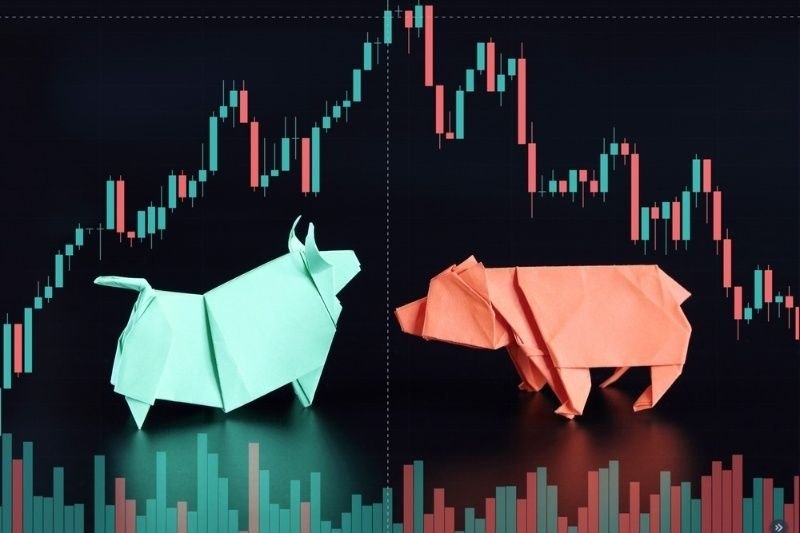
Think of “bull market” and “bear market” as shorthand for which way the markets are moving.
A bull market means stocks just keep climbing. People feel good, companies are growing, and the economy is charging ahead.
A bear market, on the other hand, starts when prices drop at least 20% and stay down. Investors get worried, spending slows, and the business outlook gets shaky.
It’s simple on paper, but living through these ups and downs is never boring.
Optimism takes center stage during a bull market. Investors see company profits rising, shoppers spending more, hiring steady, and businesses expanding. It is all that the stock price needs.
Search for the following:
Let me think of the bull period after 2009 until March 2020 (the Covid era). The S&P 500 shot up by over 400%. That’s what a bull run looks like.
No one’s got a crystal ball, but some things point to more gains: Companies posting solid earnings, strong economic numbers, more folks jumping into stocks, not-too-hot inflation, and central banks keeping things friendly for markets. When these lines are in place, investors stay upbeat.
Try This: The Bull Put Spread: A Simple Strategy for Raising Markets
Bear markets are when doubt creeps in. Investors start selling off—maybe because growth slows, inflation is a problem, rates shoot up, or there’s some crisis or global mess.
Markets can tumble even if the economy isn’t technically in a recession, but often the two go hand in hand.
Bear markets usually look like this:
Bear markets don’t last forever—on average, they stick around for about 9 or 10 months, but every one’s a little different.
Lots of things can trigger these declines:
Markets usually bounce back before the news gets sunnier, so good luck trying to nail the perfect timing.
Understanding the differences between bull and bear markets helps investors adjust expectations rather than react emotionally.
Factor | Bull Market | Bear Market |
| Market Direction | Rising prices | Falling prices |
| Investor Sentiment | Optimistic | Fearful |
| Economic Growth | Strong | Slowing |
| Corporate Earnings | Increasing | Declining |
| Employment | Generally improving | Often weakening |
| Investment Strategy | Growth-focused | Defensive and value-focused |
| Risk Appetite | Higher | Lower |
Yes, bull markets make things look easy, but there’s still risk, and here is how to invest in Bull Markets:
Don’t bail out too early. Staying invested pays off more than trying to time the top.
Sectors like tech and consumer goods usually shine when the economy’s booming.
No market’s a sure thing, so you still need balance.
Some areas get overgrown during a bull run—rebalance now and then to keep your risk in check.
Bear markets are uncomfortable, but they don’t last, and here is how to invest during bear markets:
Dollar-cost averaging means you snag more shares when prices are low. It’s all about consistency.
Companies with healthy finances tend to bounce back faster.
Selling during a drop just locks in your losses. Most investors who wait it out end up recouping their value.
Everyone investing for the long term will face bull and bear markets. Neither one sticks around forever. Bulls grow your wealth; bears give you chances to buy stocks at discount prices, and that's how you make money in a bear market. The trick isn’t guessing where the market’s headed next.
It’s sticking with a balanced plan, avoiding knee-jerk reactions, and thinking long-term. History proves markets recover in the end—even after some rough patches.
Knowing the difference between bull and bear markets helps you make smarter moves. Bull runs build your wealth; bear markets test your nerves. Both are part of the ride. Pay attention to what’s going on, spread out your investments, stay focused on your goals, and keep your approach disciplined.
You’re not trying to win every battle—you’re building something strong enough to last. If you can wrap your brain around these kinds of cycles, then you can go out there with your eyes wide open to face what happens next.
Want to crush it in your investing? Never stop reading and looking for solid stuff, and let research, not emotions, drive what you do. Inch by inch, you'll see consistent growth.
Not exactly. Even when stocks drop suddenly, it takes a while before you officially get a bear market—a 20% decline that sticks. It’s a mix of economic news, company results, and investors’ moods coming together over time. Try not to stress over a bad day or two. Focus on the big picture.
Different investments react in their own way. Some people look at things like commodities, energy stocks, Treasury Inflation-Protected Securities (TIPS), or companies that can raise prices without losing customers. Nothing’s bulletproof, though—diversify and check your mix regularly, especially when inflation heats up.
Nope. Waiting for the perfect moment is a tough (and usually losing) game. The best investors start with a long-term plan and just keep adding to it, whether the market’s up or down. Time in the market and a smart, steady approach usually beat trying to nail the lows. Patience, discipline, and spreading your money around—those are what really pay off.