Passive investing has earned the trust of new and experienced investors because it actually works over the long haul. Instead of trying to outsmart the market with constant trades, people who invest passively stick their money in funds designed to track the market as a whole. And the data doesn’t lie: research from S&P Dow Jones shows that, after you factor in fees, most actively managed funds don’t beat their benchmarks. That’s why more people are choosing the simpler route.
If you’ve ever worried that investing is too complicated, you’re not alone. The secret is that you don’t need to predict what’s next—patience usually wins. Here’s a look at how passive investing works, how it compares to the active approach, the ins and outs of index funds, passive vs active fund investing performance, key benefits and risks, and what it actually takes to build a passive portfolio you can stick with for the long run.
The beauty of passive investing is the simplicity—all you have to do is match the market, not beat it. People buy diversified funds—like index mutual funds or ETFs—and hold onto them for years rather than jumping in and out. Here’s what those usually look like:
Because these funds just follow an index, they don’t cost much to manage. That means you pay less in fees, so more of your money stays invested.
Try This: Why Insurance is Essential in a Diversified Portfolio Plan
The main reason? It takes a huge weight off your shoulders. Forget daily stress and second-guessing the market; it’s all about steady, long-term growth.
The main benefits:
It's suitable for newbies and old hands alike.
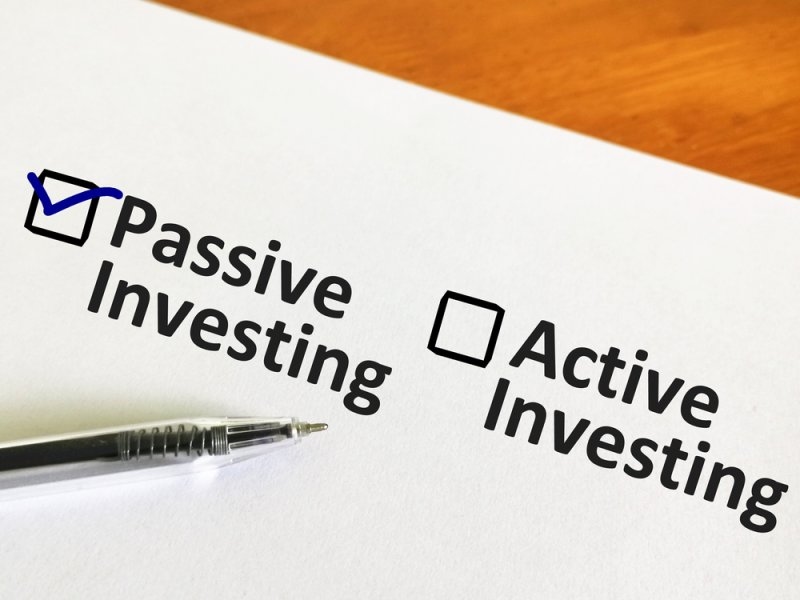
Active and passive investing are both methods to grow your wealth, but each approach takes a different road to get there.
Passive investing means trying to match the market—not beat it. Active investing means trying to outperform the market by making frequent trades. And naturally, passive has lower fees.
While the debate goes on, plenty of research shows that most actively managed funds struggle to keep up with simple index funds, especially after fees erode returns over the years.
With passive investing, most people choose funds that track major market indexes:
They own hundreds of America’s biggest companies, giving you diversification in a single move.
A sweep of thousands of stocks—small, big, and everything in between.
Want to avoid putting all your eggs in one economy? These funds add global exposure, which helps smooth out risk.
You don’t need a fancy finance degree to get started. Here’s how you do it:
What are you aiming for—retirement, a house, college for your kids, or just growing your net worth? Your goal shapes your timeline and choices.
Rather than betting on a handful of stocks, pick broad-market index funds. That’s diversification, and it helps lower risk.
Put in money every month, no matter what the market’s doing. This “dollar-cost averaging” approach smooths out the market’s normal ups and downs.
Once a year, check that your portfolio still matches your goals and risk level. Adjust only if you need to — don’t overthink it.
People sometimes mix up “passive investing” with “passive income investing.” They’re not the same.
A lot of folks mix both approaches for a solid plan that builds wealth and regular cash flow.
No investment style is perfect. Here's what passive investing means:
"Now you can know both sides of the coin. Now you know that it can work and that it can make mistakes you shouldn't commit. Now you know what the best strategy for investing is that can ensure maximum returns without many risks involved."
Passive Investing is not as easy as it seems
Here are slip-ups to avoid:
The best results come from hanging in there and ignoring the noise.
People trust passive investing for a reason: it’s straightforward and works well over long stretches. You’re not glued to market news or making snap decisions. Instead, you buy into solid index funds, let compounding do its job, and keep costs down. There’s no magic formula, but decades of research show that staying in the market, diversifying, and keeping fees low tilt the odds in your favor. Whether you want retirement security, help paying for college, or freedom down the road, passive investing is a path anyone can follow. Start with a clear goal, invest regularly, review once in a while, and don’t let headlines shake your confidence. Tiny decisions compound into real wealth over time.
Start Building Wealth With Confidence
You don’t need to predict what happens next in the market. What you need is a plan you believe in—and the discipline to keep going. Figure out your goals, choose solid diversified investments, and stick around for the ride. The earlier you start, the more your money grows over the long run.
Yes. Passive investing is built to ride out the full cycle, good years and bad. Market drops are part of the deal, and folks who keep investing — even when it hurts — are in the best position when things recover.
Definitely. Many brokers let you start small, even with fractional shares. You don’t need a fortune—just consistency. Small, regular investments can add up fast, thanks to compounding.
Once or twice a year is plenty. Check that your mix of investments fits your goals and risk comfort. Ignore the urge to react to every market move—too many changes mess with the magic of long-term investing.