Loading market data...
Articles

Learn How to Automate Your Investing with the Best Platforms

Yashovardhan Sharma
Written By Yashovardhan Sharma - Sep 18, 2024
Learn How to Automate Your Investing with the Best Platforms


You’ve got enough boring stuff on your to-do list. Remembering to invest in your portfolio shouldn’t be one of them. Setting up automated investments not only saves you time but also makes sure you keep investing regularly. No extra effort or discipline needed. There are plenty of ways to automate your investments, like signing up for your job’s 401(k) or reinvesting dividends in your brokerage account. It’s easy to set up recurring transfers and contributions, and taking a few minutes to automate your investments now can save you a lot of time and missed chances later on. Want to make your investments easier? Here’s how to set up an automated investment plan and some tips to simplify your deposits.  


Setting up an Automated Investment Plan  

A lot of people put off investing or don’t start at all because they find it overwhelming or are scared of the risks. An automatic investment plan can help clear up those worries by giving you a straightforward action plan to follow when investing or trading in stocks. Here’s how to create your plan, step by step. 


Figure out your contribution percentage

Start by choosing what percentage of your salary you can comfortably invest. Use a percentage instead of a dollar amount so that your contributions go up as your salary does. Most experts suggest investing 10 to 20 percent of your salary, but first, make sure you’ve got an emergency fund with at least three to six months’ worth of living expenses saved up.  


Choose your account

Pick a workplace retirement account, a taxable brokerage account, or an individual retirement account (IRA) to contribute to. We’ll go over the details on each of those accounts later.  


Pick your investments

Most experts recommend low-cost index funds that track market indices like the S&P 500. They’re a smart, affordable way to diversify your portfolio without having to manage a bunch of mutual funds or stocks. You could also check out exchange-traded funds, or ETFs. These can track an index, but some ETFs focus on specific sectors like small companies, international businesses, or high-yield bonds.  


Set up automatic transfers

Decide how often you want to transfer money — weekly, bi-weekly, or monthly. Most online brokerage platforms make it super easy to set up automated transfers.  


Advantages of Automated Investing  

Automating your investments is like putting your bills on auto-pay. Both methods ensure you stay consistent and on time. Bills get paid when they’re supposed to, and investments get made without you having to think about it. Automated investing also lets you benefit from dollar-cost averaging, which means consistently investing a fixed amount at regular intervals, no matter what’s happening in the market. This strategy helps even out the effects of market ups and downs, allowing you to buy more shares when prices are low and fewer when they’re high. The result? A lower average cost per share over time — a big win for any investor. Here are some other perks of automated investing: 


  • Saves you time: Instead of constantly checking the markets, you can automate your investments and spend your free time doing things you love.  
  • Keeps you from overreacting to market changes: With automated investing, you’re less likely to make impulsive decisions during market fluctuations. It also removes the guesswork of when to invest or trying to time the market.  
  • Reduces the urge to spend: Since the money goes straight into your portfolio, you cut down the risk of spending it on something else.  


Reinvesting your Own Dividends  

Some stocks pay qualified dividends, which are earnings distributions usually paid quarterly by a company to its shareholders in cash or stock reinvestment. Most brokerage firms let you set up your account to automatically reinvest in shares of the company or fund that paid the dividend.


 By reinvesting, your account value grows faster. Over time, this compounding effect can help you buy more shares of the stock or fund, boosting your overall returns significantly.


You May Also Like: Understanding the Difference Between Commodity and Product


Ways to Automate Investments

Here are some simple ways to automate your investments. It might be easier than you think, especially if you're contributing to a 401(k) or something similar for retirement. If you're looking to invest outside of work, you'll need to set up an account, choose your investments, and arrange for automatic transfers if you haven't done that yet.


Go for a micro-investing app

Micro-investing apps like Acorns and Stash have a cool way of making investing easy. They let you round up your everyday purchases to the nearest dollar and invest that spare change. You can also set up recurring transfers daily, weekly, or monthly to boost your investments. These apps act like robo-advisors, using algorithms to invest your money based on your risk tolerance and goals, but the spare change round-up feature is what makes them unique. While they’re a convenient way to start investing with small amounts, keep in mind that they can charge higher fees, especially if your account balance is low. For instance, Acorns has a flat $3 monthly fee for its basic taxable brokerage account. That doesn’t seem like much, but $36 a year regardless of your balance is pretty steep, especially when most major investing platforms don’t charge any annual or monthly fees.


Use a financial advisor

financial advisor defining how to automate earning


Not everyone needs a financial advisor for managing their investments, but if you're dealing with something complicated (like inheriting an IRA) or just want some personal advice, a financial advisor can really help you out. They can check out the investment options in your 401(k) and suggest the best ones for you. Plus, they’ll look at your current financial situation, create a personalized investment strategy, and review and tweak your portfolio over time. By letting a financial advisor handle your investment decisions, you’re kind of automating your portfolio management. They’ll keep an eye on everything day-to-day and make adjustments as needed. You get to save time while still having a pro to reach out to when you have questions about your investments or finances. If you need expert help with your money or retirement planning, Bankrate’s AdvisorMatch can connect you with a CFP® professional to help you reach your financial goals.


Opt for a robo-advisor

Robo-advisors are pretty handy because they use algorithms to create and manage a diversified portfolio based on your risk tolerance and financial goals. Investing through a robo-advisor is super easy: just send in your money, and they handle the rest. Plus, they usually have lower fees compared to a human financial advisor. Companies like Betterment and Wealthfront made low-cost automated investing accessible to everyone over ten years ago, and now even big financial institutions like Schwab and Vanguard have joined the robo-advisor game. Once you open your account, you can set up direct deposits and recurring transfers. Your funds will be invested according to your plan and automatically rebalanced as needed. Robo-advisors like Wealthfront and Betterment also offer IRAs and regular brokerage accounts, so you can pick the tax treatment you prefer before diving in.


Transfers to a taxable brokerage account

So, while retirement accounts like 401(k)s and IRAs have great tax benefits, some folks like the freedom that comes with a brokerage account. The cool thing about taxable brokerage accounts is that there are no annual contribution limits, and you won’t get hit with a 10 percent IRS penalty if you take money out before you’re 59 ½. Just keep in mind that if you sell investments that have gone up in value, you’ll have to pay capital gains taxes, even if you don’t take any money out of the account. On the flip side, with an IRA, you can dodge capital gains tax on trades and only pay income tax when you withdraw during retirement (or avoid income tax entirely with a Roth). 


Opening a brokerage account and setting up automatic transfers is pretty straightforward, just like opening an IRA. You just link your bank account, decide how often you want to contribute, and pick your investments. A lot of people end up having both a taxable brokerage account and an IRA since most major online brokerages offer both these days. Chatting with a financial advisor can help you figure out which accounts suit you best.


Direct deposits to an IRA

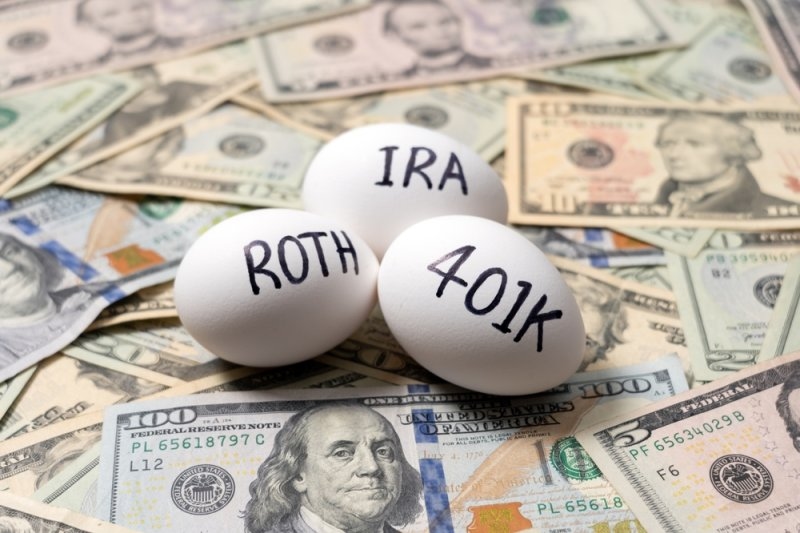
an picture of ira boxes and gold coins and notes


Not every job has a 401(k). In fact, as of 2022, about 31% of private industry workers didn’t have access to an employer retirement plan. IRAs are a good option for investing outside of work. Even if you have a 401(k), you might find better fees and more options with an IRA. Lots of online brokerages like Vanguard, Fidelity, and Charles Schwab offer IRAs, and you can open one in just a few minutes by linking your bank account for your first deposit and setting up recurring transfers. 


An IRA gives you access to a wide variety of investment choices, like stocks, bonds, mutual funds, and ETFs. Just make sure you know what you're doing or check out some beginner resources before diving in. There are two main types of IRAs: traditional and Roth, each with its own tax rules. A Roth IRA lets you withdraw money tax-free in retirement, but your contributions won’t lower your taxable income now. A traditional IRA, on the other hand, allows you to deduct your contributions from your taxable income, but you’ll pay taxes when you take money out in retirement. Both types have a 10% penalty if you withdraw early, before age 59½. In 2024, you can contribute up to $7,000 to either type of IRA, with an extra $1,000 catch-up contribution for those 50 and older. If you're self-employed, look into SEP IRAs or Simple IRAs, which have some nice benefits for small business owners, including higher contribution limits.


Contribution to workplace retirement account

If your job offers a retirement plan like a 401(k) or 403(b), take full advantage of it. With a 401(k), you can automatically put a part of your paycheck into your retirement savings before it even hits your bank account. This can lower your taxable income, which is helpful come tax season. Plus, many employers will match a percentage of what you contribute, which is basically free money for your future. In 2024, you can contribute up to $23,000 to your 401(k), with an extra $7,500 for folks aged 50 and up. When you sign up, you'll decide what percentage of your salary goes in and might even have the option to increase that amount each year. Then, you can choose your investments from a range of mutual funds, usually between 10 and 30 options. Target date funds are popular since they automatically adjust your investment mix as you get closer to retirement, shifting from stocks to bonds and cash. Just be sure to check out the specific investments in those funds, as some are more aggressive or conservative than others.


Similar Reads You May Enjoy: Dive into the world of government bonds and discover why they are a vital part of the financial mark


Conclusion

Automating your investments is a smart way to let your money cruise on auto-pilot. Whether you go for an employer-sponsored retirement plan, a robo-advisor, or an IRA, the main thing is to set up a system and let it do its thing. We hope this guide helps you to automate your investments.

Read Next

Large-cap Stocks: What They Are, Benefits, & How to Identify
Articles

Large-cap Stocks: What They Are, Benefits, & How to Identify

Key TakeawaysLarge-cap stocks refer to those with a market capitalization of over $10 billion, according to the widely accepted stock classification in the United States.Due to their size, reputation, liquidity, and market exposure, they may become valuable for investors' diversified portfolios.However, market capitalization alone cannot be considered enough to decide on the appropriateness of a stock for an investor's portfolio.Large-cap stocks consist of some of the biggest companies listed on the stock exchanges and are known to have well-established business practices, high sales, and large numbers of shareholders. The size of such stocks is important because it can affect liquidity, volatility, growth potential, and their place in investment portfolios. Whether it is about market capitalization or comparison of large-cap and mid-cap companies, understanding the classification of these stocks can assist investors in understanding their features.What are large-cap Stocks?Large-cap stocks refer to companies that have relatively high market capitalization. The market capitalization of companies above $10 billion falls under the category of large-cap companies according to a common U.S. definition. The calculation of market capitalization involves the multiplication of a firm's total outstanding shares and its stock price.Typically, the companies in this class offer existing products, generate high sales, serve many clients, and conduct business in several markets. Besides, most large-cap companies form part of major U.S. stock indices.The large-cap group consists of many companies, including those within the sectors of technology, healthcare, finance, consumer goods, industrials, energy, and others. Some of the largest firms are in the mega-cap class, which is different from the large-cap class.How Does Market Capitalization Determine Large-Cap Stocks?Market capitalization is one of the methods used to rank companies based on their market equity value. The formula for this is as follows:Market capitalization = Share price × Shares outstandingFor instance, a firm having 2 billion shares worth $10 per share would have a market capitalization value of $20 billion.The reason why market capitalization keeps changing is that share prices keep fluctuating throughout the day. This implies that a firm can get closer to or farther away from the threshold of classification based on changes in the share price. Moreover, the shares outstanding may keep fluctuating depending on various factors.Therefore, market capitalization is a good tool for classifying stocks, although it does not show whether the firm is making profits or losses.Also read: What Is a Bull Market? Key Signs, Examples & Strategies NowWhat are the Benefits of large-cap Stocks?The potential large-cap stock benefits extend beyond company size itself.Market PresenceA number of big companies have been in business for many years and have created their own brands, distribution channels, and customer base. This established market presence may help form the basis for their further activity.Market LiquidityBig firms usually draw significant attention from investors. Increased volume helps to ensure higher liquidity; however, liquidity is not the same for every stock.Income From DividendsThere are some mature companies that pay out their profits in the form of dividends to investors. This way, investors looking for income may analyze large-cap stocks concerning their dividend policy and other factors.Access to CapitalMany big companies have access to several sources of funding. This allows the firm to undertake various activities such as development, acquisitions, and so on.Portfolio DiversificationInvestors may diversify their portfolio by selecting large-cap companies from different industries. Large-cap funds and indexes may offer access to many different companies at once.Large-Cap vs. Mid-Cap StocksThe difference between large-cap and mid-cap stocks lies mainly in market capitalization, although company size may also reflect a difference in terms of maturity, growth expectations, and market presence.FactorLarge-cap StocksMid-cap StocksMarket capitalizationAbove $10 billion generally$2 billion to $10 billion generallyCompany maturity levelMore mature oftenExpansion phase usuallyGrowth prospectsCan be relatively limitedMore room for growth existsMarket coverageBroad market coverage oftenLess market coverage typicallyLiquidityUsually highVarying by companyRisk profileSubject to market and business risksVolatility can be higherThese figures constitute common categorizations rather than hard facts. Different index providers and financial institutions can use different thresholds.How to Identify Large-Cap StocksThere are many simple methods that investors can adopt to determine large-cap stocks.First, they need to look at the current market capitalization of the firm. This is something that most finance websites and trading systems display for each stock.Then, one needs to see how this compares to the classification from the website. Under the widely used criteria for large-caps in the U.S., which is anything larger than $10 billion, it will fit into the large-cap classification.However, classification is just one step in the process. Investors could also look at:Earnings and revenue growthFinancial leverage and cash flowValuation ratiosDividendsCompetitive positionIndustry conditionsStrategyStock price volatilityThis is because two firms might be classified as large-cap, but have completely different earnings growth, leverage, valuations, and risks.Large-cap Companies in the USMany popular large-cap stocks are known to be operating in the United States. Companies in the technology sector like Microsoft, Apple, NVIDIA, Alphabet, Amazon, and Broadcom have been some of the largest market caps for publicly traded companies in the United States in the last few years. Other large-cap companies can also be found in sectors like healthcare, financial, consumer, and industrial sectors.It must be noted that this group is dynamic in nature. Market capitalization may increase or decrease according to stock price movements, as well as other corporate activities.Must read: Stock Market Trends 2026: Smart Strategies For InvestorsLarge-Cap Stocks and Portfolio ConstructionLarge-cap stocks are often considered core stocks due to the fact that they account for a significant share of the U.S. equity market. Yet, a portfolio does not have to include only large-cap stocks.Stocks of mid-caps and small caps will allow an investor to get exposure to different stages of business growth; international investments will help to achieve geographic diversification. The exact composition depends on various parameters, including investment horizon, risk tolerance, financial goals, and already owned stocks.It is also important to remember that even large-cap does not guarantee safety. Large companies can suffer from declining revenues, increased regulatory scrutiny, competition, reduced profitability, and falling stock prices.ConclusionThe importance of large-cap stocks in the U.S. stock market is in the fact that there are many firms on the list that are well-established, with substantial market value and extensive operations. This makes such stocks liquid and potentially interesting for the purposes of investment due to dividends and financing availability.However, market capitalization is not the sole characteristic of a firm. There are many other factors that have to be taken into account when considering investment in large-cap stocks.Frequently Asked QuestionsAre large-cap stocks good for long-term investing?Large-cap stocks may be suitable for investing in long-term investment plans since many are well-established firms with sizeable businesses. Nevertheless, it all depends on the investment objectives and the other factors involved. Being large-cap does not ensure good performance in the long run.What are some of the best-performing US large-cap stocks?There isn't any definitive list of the highest-performing large-cap stocks in the US since performance varies with time. In comparing the performance of these stocks, it would be better to state the period being compared, since performance is always dependent on the period being compared.How are large-cap stocks different from small-cap stocks?Large-cap stocks refer to those that have significantly higher market capitalization compared to the market capitalization of small-cap stocks. Large-cap stocks are generally older companies that might have high liquidity as compared to small-cap stocks. Small-cap stocks have different risk profiles and growth opportunities as compared to large-cap stocks. The difference between large-cap and small-cap stocks is usually based on the basis of market capitalization and not on the quality of the business.Do large-cap stocks give dividends?Some large-cap stocks give dividend payments regularly because these stocks are well-established in their operations and earnings. Not all large-cap stocks give dividends.Can a company move out of the large-cap category?Yes. Because market capitalization depends partly on the company's share price, a significant change in the stock price can affect its market-cap classification. Changes in shares outstanding can also influence market capitalization. Classification thresholds may differ between index providers, so a company's category can vary depending on the methodology being used.

What Is a Bull Market? Key Signs, Examples & Strategies Now
Articles

What Is a Bull Market? Key Signs, Examples & Strategies Now

Key TakeawaysA bull market just means stock prices are climbing, usually 20% or more off a recent low.Strong GDP, low unemployment, and healthy profits are usually the giveaway signs something's shifted.Bull market vs. bear market really comes down to one thing: are prices going up or down?The 2009-2020 run and the 2003-2007 recovery are two of the bigger examples worth knowing.Good bull market investing has less to do with luck and more to do with not panicking.You've probably heard someone on the news talk about a "raging bull market" and wondered what exactly that means beyond sounding dramatic. What is a bull market, in plain terms? It's simpler than the financial jargon makes it sound. Understanding it can genuinely change how you approach your own money-whether that's a 401(k), a brokerage account, or just watching the headlines with a bit more context. Below, we'll get into what actually defines a bull market, how to spot one before everyone else does, and how it compares to its gloomier counterpart, the bear market.What Is a Bull Market?Put simply, a bull market is a period where stock prices keep rising, often for months or even years at a stretch. Most analysts will tell you it's "official" once prices climb 20% from a recent low point. But honestly, the number is only part of the story. What really defines a bull market is the mood behind it-investors feeling good, companies posting solid earnings, and that sense that things are heading in the right direction.How Does a Bull Market Work?It works a bit like momentum in any other area of life. Prices go up, people notice, and more buyers pile in hoping to catch the wave. That buying pushes prices higher still, which pulls in even more buyers. It can feel almost self-fulfilling for a while. Eventually something breaks the spell-rising rates, disappointing earnings, or just plain fatigue-and the cycle slows down.Also Read: 7 Best AI Stocks: A Detailed Guide for Investors in 2026Bull Market vs Bear Market: What's the Difference?This is one of those comparisons that trips people up early on, and it's worth clearing up. A bear market is basically the mirror image: prices fall 20% or more from a recent peak, and the mood shifts from confident to cautious, sometimes bordering on outright fear.FeatureBull MarketBear MarketPrice directionRisingFallingInvestor sentimentOptimisticPessimisticTypical triggerEconomic growthRecession fearsBuying activityHighLowAverage durationSeveral yearsSeveral monthsNotice that bear markets tend to be shorter but sharper, while bull markets stretch out longer and build more gradually. That asymmetry is actually one reason long-term investors tend to come out ahead over time.What Causes a Bull Market?There's almost never a single cause-bull market causes tend to pile up together rather than show up one at a time. A strengthening economy usually kicks things off. Once interest rates drop, borrowing gets cheaper, so businesses expand, and everyday people spend a bit more freely. Add rising corporate profits, maybe a bit of stimulus from the government, and better job numbers, and you've got a self-reinforcing cycle that can run for a surprisingly long time.How Long Does a Bull Market Last?Here's the honest answer: nobody really knows ahead of time. Some bull markets burn out after a year or two. Others keep chugging along far past what anyone predicted. The run from 2009 to early 2020 lasted almost 11 years, which is a good reminder that these things don't follow a fixed script.Signs of a Bull Market: Key Indicators to WatchSpotting the signs early is genuinely half the game for any investor paying attention. These bull market indicators mix hard economic data with plain investor behavior, and once you've seen a few cycles, the pattern starts to feel familiar.How to Identify a Bull Market?Stock indices keep hitting new highs, again and againUnemployment drops while GDP growth holds steady or improvesCorporate earnings come in strong across multiple sectors at onceTrading volume climbs as more investors decide to jump inEveryday consumers start spending more freely, not just savingMust Try: Everything Investors Need to Know About Low-Cost Index FundsBull Market Examples in HistoryNumbers tend to explain things better than definitions ever could. So here are a few real bull market examples worth knowing, if only because they show how differently these cycles can play out.PeriodDurationApproximate Gain2009-2020131 monthsAround 348%2003-20074 yearsRoughly 100%1990-2000Nearly 10 yearsOver 400%That 2009-2020 stretch still holds the record as the longest bull market on paper, born straight out of the 2008 financial crisis recovery. It's proof that when policy support and improving fundamentals line up, a rally can run far past what most people expect going in.What Happens During a Bull Market?Buyers simply outnumber sellers, over and over, across most corners of the market. Profits climb, jobs get easier to come by, and people generally loosen up their spending a little. That said, don't expect a smooth, uninterrupted climb-short pullbacks happen even in the strongest bull runs, and that's completely normal, not a red flag.How to Invest During a Bull Market?Here's where things get tricky. Bull market investing takes real discipline, even-maybe especially-when everything around you seems to be going up. It's tempting to chase whatever's hot at the moment, but that impulse is usually what trips people up the most.Smart Strategies for Bull Market StocksSpread your money across a few sectors instead of betting everything on one hot stock.Pick a realistic exit point ahead of time, and try not to trade purely on emotion.Rebalance every so often so you're actually locking in gains along the wayLook for bull market stocks backed by real fundamentals, not just social media buzzFor more on reading market trends, take a look at our stock market basics guide and our piece on portfolio diversification strategies over on StockPrices.com. Frequently Asked QuestionsWhat is a bull market in simple terms?Basically, stock prices are on the way up, and not just a little. We're talking a 20% climb or more from wherever they last bottomed out. There's usually a reason behind it too. Investors are feeling confident, the economy's chugging along, and companies are actually making money.How is a bull market different from a bear market?Opposite mood, opposite direction. Bull markets mean rising prices and people feeling good about their portfolios. Bear markets are the gloomy flip side: everything's dropping, and nobody trusts the rally. One other difference worth knowing: bull runs usually last longer because they're built on actual growth, not just a temporary mood swing.What are common signs of a bull market?A few things tend to line up. Stock indexes start breaking records. Unemployment drops. Companies, across the board, start posting better earnings than expected. You'll also notice more people trading and spending, which is usually a decent sign the trend has legs and isn't just a fluke.How long can a bull market realistically last?There's no fixed timeline here. Some fizzle out after a year. Others run for a decade plus. The record holder lasted almost 11 years, from 2009 right up until early 2020, when the pandemic put an abrupt end to it.Is it safe to invest during a bull market?"Safe" is probably too strong a word. Corrections still happen, even in the middle of a good run, so nothing's guaranteed. The usual advice still holds, though: spread your investments out, don't get swept up in the hype, and stick with whatever plan actually makes sense for you.

7 Best AI Stocks: A Detailed Guide for Investors in 2026
Articles

7 Best AI Stocks: A Detailed Guide for Investors in 2026

Key TakeawaysOwning completely raw physical server infrastructure entirely beats gambling heavy cash on totally risky software fads.Heavy digital chip monopolies command massive pricing leverage over desperate software developers.Scouting solid tech operations requires avoiding completely unprofitable startups and strictly buying massive profitable titans.Chasing the absolute best AI stocks completely separates highly ruthless Wall Street players from totally clueless retail buyers. Throwing heavy cash at totally random tech tickers guarantees massive portfolio destruction instantly. Serious institutional investors completely ignore the empty startup promises, locking heavy capital strictly into solid companies physically building the massive digital backbone. Dodging these physical hardware operations completely leaves massive money sitting on the absolute table while smart operators totally drain the massive tech rally dry forever.Must Read: How and Why Should You Invest in Blue Chip Stocks?What are AI Stocks?Understanding exactly what AI stocks are completely exposes the raw digital reality. These specific tech companies physically build massive semiconductor chips or write totally ruthless machine learning code. Throwing heavy capital into these massive corporate operations funds the next generation of totally massive automated digital warfare systems.7 Best AI Stocks to Buy in 2026 for Long-Term BenefitsGrabbing massive tech ownership requires completely ignoring totally worthless companies entirely. These specific corporate titans totally dominate the absolute digital landscape safely.1. Nvidia CorporationThis massive chip manufacturer totally controls the absolute hardware market. Their raw graphics processing units power every single massive server farm operating today globally.2. Alphabet IncHolding massive search monopolies completely guarantees total digital domination. Their heavy cloud infrastructure totally traps enterprise clients inside their strict ecosystem forever.3. Taiwan SemiconductorThis massive physical factory completely manufactures the absolute hardest tech globally. Nobody builds highly complex raw silicon wafers faster than this massive offshore operator.4. Dell TechnologiesBuilding massive physical server racks prints heavy cash. They strictly supply the raw physical hardware required to house massive processing chips safely.5. Microsoft CorporationPushing heavy digital software directly into massive corporate offices guarantees absolute survival. Their aggressive cloud strategy forces legacy companies to upgrade instantly.6. Broadcom IncControlling massive network switches completely locks down heavy internet traffic. They physically connect the massive server farms seamlessly without any brutal connection drops.7. Micron TechnologyStoring completely massive datasets requires totally raw memory chips. This operator strictly builds the absolute physical storage necessary to feed data into massive processors.How to Find the Best AI Stocks to Buy Now?Scouting heavy digital operations requires completely ruthless financial screening immediately. Spotting totally solid tech investments instantly prevents massive portfolio destruction.1. Checking Raw Cash FlowSolid tech operators totally print heavy physical cash daily. Avoiding entirely unprofitable startups stops massive financial bleeding.2. Tracking Heavy MoatsMassive tech titans crush tiny competitors effortlessly. Buying heavily monopolized companies entirely guarantees absolute total survival during brutal market crashes.3. Reading Server DemandHeavy chip orders completely dictate total future revenue jumps. Spotting massive factory backlogs proves institutional buyers need those raw physical products immediately.4. Analyzing Corporate LeadershipRuthless corporate executives navigate heavy digital wars perfectly. Betting on totally cold, aggressive tech bosses ensures absolute massive long-term shareholder dominance.Top Pick: Are Semiconductor Stocks Overvalued? Things You Need to KnowWhy Choose AI Stocks for Long-Term Investment?Parking heavy cash inside these massive tech operators completely guarantees absolute massive growth. This brutal digital shift completely forces every single legacy industry to upgrade.1. Escaping Legacy DecayOld corporate business models are currently dying brutal deaths. Grabbing heavy tech shares forces personal portfolios to survive this massive global transition.2. Catching Exponential ScalingMachine learning algorithms completely improve independently overnight. This raw digital acceleration completely pushes massive tech valuations skyward without hitting normal business ceilings.3. Following Institutional CapitalMassive hedge funds dump heavy billions into solid chip manufacturers. Following this money trail totally guarantees riding a highly aggressive institutional market wave.Understanding the Benefits of Investing in AI Infrastructure StocksFunding the totally raw physical backbone entirely beats buying risky digital software. This massive physical hardware acts as the absolute ultimate technological toll road.1. Owning the Raw PickaxesSelling the physical shovels completely beats totally mining for fake digital gold. Every single software company absolutely must buy heavy raw server racks.2. Securing Hard AssetsPhysical semiconductor factories totally hold completely massive intrinsic value. Owning heavy physical concrete operations protects massive cash from totally collapsing software fads.3. Dominating the Supply ChainRaw material shortages completely force massive desperate tech bidding wars. Holding these strict bottlenecks completely allows operators to command incredibly high price tags.ConclusionSitting totally frozen while this massive digital shift happens guarantees absolute total financial irrelevance forever. The absolute best AI stocks completely dominate the heavy global market by totally commanding raw physical server hardware and ruthless software monopolies. Stop chasing totally garbage digital pennies and lock heavy cash into these massive institutional giants. Taking totally heavy aggressive action today completely ensures absolutely massive future survival inside a permanently highly brutal tech-dominated global economy.Frequently Asked QuestionsHow do massive chip manufacturers actually secure completely massive global supply chains? Heavy tech operators completely sign totally ruthless long-term physical contracts instantly. They strictly lock down raw global materials years early, completely starving tiny tech competitors of absolute physical survival.What totally massive risks completely threaten these highly aggressive digital tech monopolies today? Heavy federal government regulators completely launch totally brutal antitrust lawsuits constantly. These massive legal strikes threaten to chop these highly aggressive corporate empires into tiny broken pieces.Do completely massive global energy grids actually support totally heavy tech server farms? Massive digital data centers constantly drain absolutely insane levels of raw electricity. Heavy hardware operators completely secure totally exclusive nuclear power deals to keep those massive server racks operational.How do institutional investors actually analyze highly aggressive semiconductor market cycles? Wall Street sharks track exactly how massive tech supply totally matches raw global demand. They strictly dump heavy shares instantly the absolute second those massive digital factory orders drop.Can totally new semiconductor factories actually catch completely massive legacy hardware operators eventually? Building totally raw physical silicon factories costs incredibly massive raw billions. This totally aggressive financial barrier completely prevents totally fresh market entrants from absolutely ever catching the massive global titans.

How and Why Should You Invest in Blue Chip Stocks?
Articles

How and Why Should You Invest in Blue Chip Stocks?

 Quick TakeawaysBlue chip stocks represent large, financially stable industry leaders that offer reliable earnings and steady growth.Historical market data shows that high-quality mega-cap companies consistently outperform speculative assets during economic downturns.Regular dividend payouts provide a dependable passive income stream for retirees and risk-averse investors.Including these equity pillars in your portfolio helps cushion against steep market volatility and capital loss.Anyone can invest in these market leaders through direct stock purchases, exchange-traded funds, or index funds.Navigating the stock market can feel overwhelming when daily headlines bounce between record highs and sudden crashes. If you are looking to grow your wealth without losing sleep over erratic market swings, you are not alone. Millions of investors share your goal of finding reliable financial options that balance security with consistent returns.According to long-term market data from the S&P Dow Jones Indices, S&P 500 index companies, which are heavily weighted with established industry leaders, have delivered an average annual return of roughly 10% over the last several decades. This proves that long-term market dominance beats short-term speculation every single time.In this article, we will explain the blue chip stocks definition, examine real-world blue chip stock examples, and highlight the key features of top blue chip companies. You will also discover practical strategies to select the best blue chip stocks to strengthen your personal investment strategy.What are Blue Chip Stocks: Definition and Origin?When exploring the equity markets, understanding what are blue chip stocks is your first step toward building a resilient portfolio. The term originated in the early 1920s when Oliver Gingold, an employee at Dow Jones, noticed certain high-priced shares trading consistently higher than others. Borrowing from poker, where blue chips hold the highest monetary value, the phrase became synonymous with top-tier corporate quality.Today, the blue-chip stocks definition refers to equity shares of well-established, financially sound, and nationally recognized corporations. These enterprises boast market capitalizations usually reaching tens or hundreds of billions of dollars. They maintain dominant market shares, solid balance sheets, and a proven ability to weather severe economic recessions.Key Characteristics of Top Blue Chip CompaniesNot every large corporation qualifies for this elite status. True market leaders share specific operational traits that set them apart from speculative growth firms.Market Capitalization and Dominance: These firms operate at a massive scale, holding dominant market share across their core business sectors.Consistent Dividend Payouts: Most maintain an uninterrupted track record of distributing dividends to shareholders across decades.Low Debt and Strong Credit: Robust cash reserves and low leverage allow them to secure favorable debt terms during tight credit environments.Economic Resilience: Established brand loyalty and diversified revenue streams allow them to remain profitable even in slow economies.Core Benefits of Investing in the Best Blue Chip StocksInvestors across all life stages choose these foundational assets for very specific structural reasons. Below is a clear breakdown of how they compare against mid-cap and small-cap alternatives:Investment FeatureBlue Chip StocksMid-Cap StocksSmall Cap StocksRisk LevelLow to ModerateModerate to HighHighDividend ReliabilityVery HighVariableRare / MinimalVolatilityLowModerateHighGrowth SpeedSteady and ModerateModerate to FastRapid / UnpredictableMarket LiquidityHighModerateVariableSteady Dividend IncomeRetirees and income-seeking investors value these equities for reliable quarterly payments. Many mature corporations steadily increase their dividend payouts year after year, offering protection against rising inflation.Capital Preservation and GrowthWhile small caps might experience wild price spikes, industry leaders provide slow, compounding price appreciation. Their deep balance sheets prevent permanent capital loss during major bear markets.Real-World Blue Chip Stocks Examples Across IndustriesLooking at real-world blue-chip stock examples helps illustrate how sector leaders operate in daily life. These household names represent stable business models across major economic sectors.Technology LeadersCompanies like Microsoft and Apple demonstrate how market cap scale combined with sticky software ecosystems creates sustainable cash flows across decades.Consumer Goods and HealthcareGiants like Procter & Gamble, Coca-Cola, and Johnson & Johnson provide daily essentials. People buy household items and medicine regardless of overall market health, guaranteeing defensive cash generation.Try This: Stock Market Trends 2026: Smart Strategies For InvestorsHow to Select the Best Blue Chip Stocks for Your Portfolio?Selecting the right equities requires looking beyond brand recognition. Financial advisors use key financial metrics to evaluate corporate strength.Step 1: Check the price-to-earnings ratio to ensure historical valuation alignment.Step 2: Verify a low debt-to-equity ratio to confirm manageable leverage.Step 3: Analyze 10-year Dividend Growth History for consistent cash returns.Step 4: Inspect Return on Equity to evaluate management efficiency. By filtering companies through these quantitative tests, you protect your capital from overvalued businesses that may be losing their competitive edge.ConclusionWe have explored the essentials of equity investing, from understanding the core blue-chip stock definition to reviewing real-world blue-chip stock examples across diverse economic sectors. These market leaders offer unmatched stability, consistent dividend payouts, and long-term growth that every serious investor needs. Whether you are a beginner building your first portfolio or a retiree securing stable income, these dependable assets serve as the perfect financial foundation. Combining research with disciplined asset allocation empowers you to navigate changing economic conditions with confidence.Taking control of your financial destiny starts with staying informed on real-time market trends, stock valuations, and financial analysis. Access reliable market updates, expert technical insights, and comprehensive equity tracking tools to build a smarter, stronger portfolio for your long-term success.FAQsHow do Blue Chip Stocks Handle High Inflation Environments?Established market leaders handle high inflation far better than smaller companies due to their immense pricing power. Because these corporations offer essential products and enjoy strong customer loyalty, they can pass rising input costs directly to consumers without losing sales volume. Furthermore, their robust balance sheets and low borrowing needs shield them from high interest rates, helping preserve profit margins during inflationary periods.What is the Difference Between Blue Chip Stocks and Value Stocks?Blue chip status defines a company's market scale, financial stability, and brand reputation, whereas value stock status refers strictly to current market valuation metrics. A company becomes a value stock when its trading price drops below its intrinsic value based on earnings or assets. While many established industry leaders are also categorized as value stocks, others with strong growth rates may trade at premium valuations.Can a Blue Chip Company Ever Lose Its Status?A corporation can lose its elite status if it suffers from persistent technological disruption, poor managerial execution, or heavy debt burdens. Famous historical examples include legacy photography and video rental giants that failed to adapt to digital shifts. When a firm loses its market dominance and dividend consistency, analysts remove it from top-tier lists.What Percentage of a Portfolio Should Be in Blue Chip Stocks?Financial advisors often recommend allocating 30% to 60% of an equity portfolio to established market leaders, depending on your risk tolerance and age. Conservative investors and retirees typically lean toward higher allocations to prioritize income stability and capital preservation. Younger wealth builders might blend them with mid-cap or index funds to achieve faster capital growth.Are Blue Chip Dividends Taxed Differently Than Regular Income?Dividend payouts from qualified corporate market leaders are usually taxed at favorable long-term capital gains rates rather than standard income tax brackets. To qualify for these lower rates, investors must hold the stock for more than 60 days during a specific window around the ex-dividend date. Holding these income-generating assets in tax-advantaged accounts like IRAs can further boost your overall net returns over time.

Ask stocky