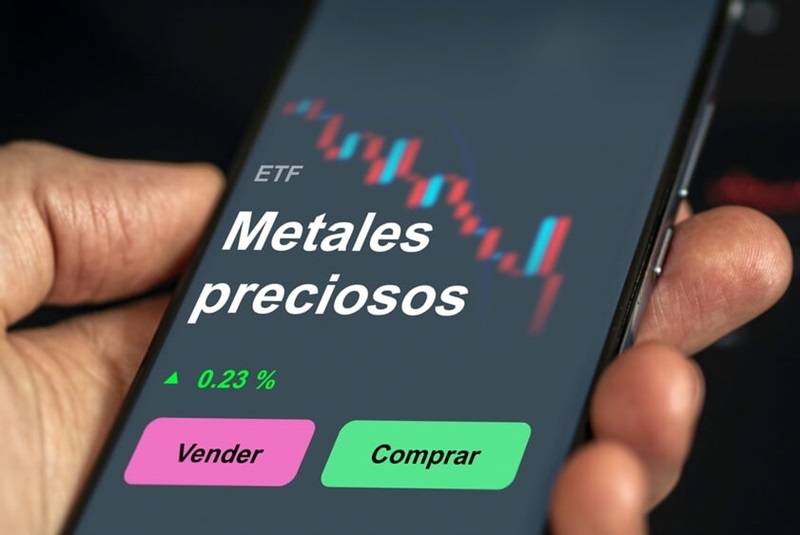
Exchange-traded funds (ETFs) for precious metals hold assets such as gold, silver, and platinum and issue shares representing ownership in these assets. Investors in precious metals ETFs gain exposure to the price movements of these metals without the need to physically possess them. Investors often allocate a portion of their portfolio to these instruments for various reasons. Gold and its counterparts serve as a hedge against inflation and economic uncertainty. Their low correlation with traditional assets like stocks and bonds makes them valuable for diversifying a portfolio.
Additionally, they offer convenience and liquidity compared to the logistical challenges of owning and storing physical metals. However, like any investment, these instruments carry risks. Their value fluctuates with the often volatile prices of metals, and there may be discrepancies in how well the funds track the performance of their underlying assets.
Here's an overview of how precious metals ETFs diversify and operate, and the roles of various entities involved:
Responsible for creating, promoting, and managing the instrument.
Ensure liquidity by facilitating the buying and selling of these shares on stock exchanges.
Large financial firms create and redeem these shares by exchanging underlying assets. They maintain the balance between the ETF's shares and its underlying assets.
These instruments fall into two main categories:
These track the prices of metals directly or through derivatives contracts. They may hold physical assets or use futures contracts to mimic metal prices.
These track the performance of companies involved in mining, refining, and trading precious metals. They provide exposure to the industry's dynamics but face operational risks associated with mining activities.
The process of buying and selling these instruments is relatively straightforward:
Choose a brokerage account based on your preferences, whether it's a do-it-yourself online broker or one offering advisory services.
After funding your brokerage account, you can place orders for these instruments, utilizing different types of orders to control prices.
Monitor the price performance of your investments regularly to inform your investment strategy and decision-making process.
In the United States, there are more than 20 precious metals ETFs, including a couple of exchange-traded notes (ETNs). These instruments can be categorized based on the precious metals they invest in or the sectors they focus on. Precious metals typically encompass eight elements, including gold, silver, platinum, palladium, and others. Gold and silver are commonly traded, followed by platinum and palladium. Based on its price of around $4,500 per ounce, iridium is considered the most precious of the precious metals due to its rarity and specialized industrial uses.
Gold has maintained its allure for millennia, serving as a hedge against inflation and a safe haven during market volatility. Gold funds outnumber those for any other precious metal, with some funds holding physical gold while others use derivatives to track gold prices. Additionally, there are gold mining ETFs that invest in companies engaged in gold exploration, mining, and refining. You can also opt for custom basket ETFs.
Silver, with its rich history as a valued commodity, is prized for its industrial applications. Like their gold counterparts, these aim to replicate the performance of the silver market, either by holding physical silver or using derivative instruments such as futures contracts.
Platinum, a rare and industrially valuable metal, has dedicated funds backed by physical holdings. Similarly, there's a single U.S.-traded fund for palladium, also backed by physical metal. Both platinum and palladium are sensitive to market changes, particularly in industries like automotive manufacturing. Investing in these instruments carries risks, especially due to market volatility and the sensitivity of platinum and palladium prices to industrial demand fluctuations. Some instruments offer exposure to multiple precious metals, either through physical holdings or futures contracts.
Investing in these instruments offers benefits such as diversification and protection against economic uncertainties and may also provide tax efficiency. They provide easy access to precious metals markets without the complexities of owning physical metals. They are cost-effective and liquid, allowing investors to trade shares easily. However, these instruments also entail risks, including price volatility, counterparty risk, and potential discrepancies in tracking their underlying assets. It's essential for investors to conduct thorough research before investing in these funds.
Selecting the best precious metal investment depends on individual risk tolerance and investment objectives. Gold is traditionally viewed as a store of value, while silver is more tied to industrial applications. Platinum and palladium may offer higher potential returns but come with increased volatility.
Before investing in these instruments, it's essential to consider factors such as expense ratios, liquidity, and tracking errors. Expense ratios, which cover the fund's operating costs, can significantly impact returns over time. Liquidity is crucial for easy entry and exit from positions, particularly in volatile markets. Tracking error indicates how closely the fund's performance aligns with the underlying assets' price changes.
Notable U.S.-traded instruments include single-metal funds for gold, silver, platinum, and palladium, as well as multi-metal ETFs. Examples include SPDR Gold Shares (GLD), iShares Gold Trust (IAU), and abrdn Physical Platinum Shares ETF (PPLT), each offering exposure to specific precious metals with varying features and expense ratios. Several of these instruments provide exposure to rare earth metals, with examples like the VanEck Rare Earth/Strategic Metals ETF (REMX), which invests in equities related to rare earth mining and production.
These funds offer a cost-effective avenue to access precious metals markets, eliminating expenses like storage and delivery fees associated with physical metal ownership. In addition to these funds, mutual funds focusing on the sector provide exposure to precious metals. However, they stand out due to their ability to be traded throughout the day, allowing investors to capitalize on short-term market fluctuations. Furthermore, they often feature lower expenses and minimum investments compared to mutual funds.
Investors can also opt to invest in mining companies, either individually or through funds. Unlike ETFs, investing in mining stocks entails taking an equity stake in the industry, exposing investors to different risks, such as operational and geological concerns.
When it comes to trading these instruments, similar to stocks or other funds, there are specific tax considerations to keep in mind. The duration of your investment dictates your tax obligations. Holding shares in these instruments for less than a year subjects you to a short-term capital gains tax, taxed at your regular income tax rate. On the other hand, holding the asset for over a year incurs taxes based on the long-term capital gains rate. For tax purposes, precious metals are classified as collectibles, which include metals-backed ETFs.
This classification results in these instruments being subject to a maximum federal long-term capital gains tax rate of 28%, surpassing the 20% cap for most stocks, bonds, and other investments. Understanding this higher tax rate is crucial for factoring it into your investment calculations.
Precious metals ETFs offer investors a convenient way to access precious metals markets without the challenges associated with physical ownership. They provide diversification to investment portfolios and offer liquidity and flexibility through stock market trading. It's crucial to understand the workings of these instruments, including their expenses and investment strategies, and consulting a financial advisor may be beneficial in aligning these assets with your overall investment strategy.